
Disclaimer: At the request of our client, the names of the firms mentioned in this article have been changed to protect their privacy. At Build Safe Escrow, client confidentiality and discretion are a top priority.
Building More Than Structures
In the heart of Miami’s ever-evolving skyline, one construction firm quietly changed the game—not with flashier renderings or bolder architecture, but with a simple, strategic decision: to adopt construction escrow as the backbone of every investor-funded project.
For years, VistaSouth Development Group had carved out a reputation for building sleek, modern multi-family and mixed-use properties in Miami’s booming urban corridors. But as the company prepared to scale into larger markets and court institutional capital, one question kept surfacing—loud and clear from their investor meetings:
“How do we know the money’s being used exactly how and when it should be?”
It wasn’t just about returns anymore. It was about transparency, accountability, and protection.
Their solution? A system that let money move only when actual construction milestones were verified: construction escrow.
What started as a way to reassure skeptical investors turned into a complete shift in how VistaSouth operated—and ultimately, how they raised capital, built faster, and earned long-term trust.
The Investor’s Dilemma: Risk vs. Return in Construction
Let’s face it: investing in real estate development comes with layers of risk. Budgets shift. Contractors vanish. Timelines stretch. And often, private investors have little visibility into how their funds are actually being used.
When VistaSouth began pitching a $12 million infill project in Miami’s Wynwood district, one institutional investor voiced what others were thinking:
“Your team is impressive, but I’ve been burned before. I don’t invest unless I can see exactly where the money goes.”
That became the lightbulb moment.
VistaSouth’s leadership understood: trust isn’t just earned with polished pitch decks or past performance. It has to be systemic. It has to be trackable. And it has to be built into the process from day one.
They turned to construction escrow—a tool historically underutilized in commercial development but perfectly designed to solve this very problem.
How Construction Escrow Works—And Why It’s Game-Changing
Unlike traditional lump-sum fund releases, construction escrow locks funds in a secure, third-party account and releases them only when verified milestones are completed.
For VistaSouth, this meant structuring every draw into a clear, pre-agreed timeline:
- Milestone 1: Demolition completed and inspected
- Milestone 2: Foundation poured and certified
- Milestone 3: Framing inspection passed
- …and so on.
Each time a milestone was reached, their escrow partner—Build Safe Escrow—would verify the work, notify stakeholders, and release only the funds tied to that stage.
“It’s like having a financial referee,” said Ryan Cordero, VistaSouth’s Project Manager. “Everyone plays fair when the rules are that clear.”
The result? No more chasing payments. No more investor concerns. No more guesswork.
Read blog: Understanding Construction Payment Schedules and Avoiding Disputes
Real Results: Raising More with Less Risk
After introducing escrow into their operating model, VistaSouth saw more than just smoother internal processes. They saw a surge in capital confidence.
- Their Wynwood project closed 30% faster than expected.
- Investors received weekly milestone reports directly from the escrow dashboard.
- They raised $4.2 million in a supplemental round from new investors who cited escrow as their main reason for joining.
One investor, a family office out of New York, said it best:
“Escrow made it real. I wasn’t just wiring money and hoping. I was investing with structure.”
For VistaSouth, escrow didn’t just protect money. It became a fundraising tool—a competitive edge in a market where everyone promises transparency but few deliver it.
Behind the Scenes: Escrow as a Daily Operations Tool
For VistaSouth, integrating construction escrow wasn’t just about investor relations—it reshaped how their entire internal team managed builds.
Once each project was funded, the Build Safe Escrow platform became the team’s command center for financial flow. Project managers submitted milestone evidence—photos, inspection reports, contractor certifications—directly through the portal. Stakeholders received real-time alerts when a draw request was pending or approved.
Instead of endless email threads and back-and-forths over invoices, the system turned subjective progress into objective checklists.
“It brought structure to the chaos,” said Erika Lin, VistaSouth’s Director of Operations. “And because everything is documented and automated, we’re saving hours each week on financial reporting.”
Contractors on site even reported increased morale—because they knew when a milestone was met, payment wouldn’t get stuck in limbo. Payments were made within 48 hours of verification, creating a consistent rhythm between work and compensation.
The Bigger Picture: Trust Scales Projects
Since adopting construction escrow, VistaSouth now uses it as a standard requirement for every project over $500,000—whether the capital comes from private investors, institutional funds, or a joint venture partner.
And while the operational improvements are measurable, the intangible value has been just as powerful:
- Their investor update meetings have gone from defensive to proactive.
- Their legal counsel noted a sharp decline in contract disputes and back-end compliance work.
- Their reputation among brokers and capital advisors has shifted from “emerging firm” to “institutional-ready.”
“We used to raise money on vision,” said CEO Marlon Vega. “Now we raise it on process—and construction escrow is at the center of that.”
It’s become a key part of their brand identity: disciplined, transparent, and tech-forward. In a region like Miami—where the construction boom has unfortunately brought a parallel boom in fraud and litigation—VistaSouth’s escrow-first model signals to partners that their money, and their trust, are secure.
Takeaway for Developers and Builders
The message is clear: construction escrow isn’t just for homeowners trying to avoid scam contractors. It’s a strategic tool for serious builders who want to scale with integrity and efficiency.
Here’s what VistaSouth’s story teaches us:
- Transparency reduces friction across every stakeholder—from laborers to lenders.
- Accountability becomes automated when payments are tied to real progress.
- Investor trust can become your most powerful marketing asset—when it’s earned through systems, not just promises.
Whether you’re a midsize builder looking to enter new markets or a seasoned developer managing multiple active sites, construction escrow gives you an edge in today’s capital-sensitive environment.
Final Thoughts
You’re not just building properties. You’re building relationships, reputation, and recurring access to capital.
When your financial system tracks progress as closely as your team does, trust becomes scalable—and investment becomes repeatable.
That’s the power of construction escrow.
Read blog: What is Construction Escrow and Why Do You Need It

👉 Ready to gain investor confidence and raise smarter?
Let Build Safe Escrow help you secure funds, streamline payments, and turn progress into proof.
[Schedule a free consultation today] and learn how our milestone-based escrow system is helping developers like protect projects and build better futures.
- ADU Construction Escrow: How Investors Fund a Backyard Build Only as the Work Gets Done
 Funding an ADU you rarely get to visit? ADU construction escrow ties every draw to a verified stage, from permits to final inspection, so your capital becomes a finished, rentable unit.
 - No Deposit Contractor? How to Start Work Without a Deposit and Still Get Paid
 Clients keep refusing big deposits, and starting unfunded is a risk no builder should carry. Here is how to skip the deposit, have the client fund escrow first, and get paid on verified milestones.
 - How to Set Up a Construction Escrow Account: A Homeowner’s Step-by-Step Guide
 Before you wire a renovation deposit, settle seven decisions, gather your documents and ask any provider five questions. This homeowner guide shows how to set up a construction escrow account in the right order.
 - HOA Roof Replacement Escrow: How Property Managers Protect Reserve Funds on the Biggest Job
 A roof is often the biggest check a board writes. Here is how property managers use milestone-based escrow to protect reserve funds, keep the roofer paid on time, and document every release.
 - Paying Cash to Build a House? How Homeowners Keep Control of Every Draw
 No construction loan means no bank inspector checking your draws. This guide shows how homeowners paying cash rebuild that structure, so money never moves ahead of the work.
 - Proof of Funds for Construction: How Builders Confirm the Client Can Pay Before Breaking Ground
 A bank statement shows the money today, not on draw day. Learn how builders ask for proof of funds early, tie payments to milestones, and keep cash-client funds committed in escrow.
 - Contractor Payment Process for Property Managers: How to Build One That Survives an Audit.
 Sooner or later an owner asks who approved that payment. This guide gives property managers five controls and a simple payment file that make every contractor invoice audit-ready.
 - Construction Draw Verification: How Investors Know Their Capital Went Into the Build.
 Monthly photos show activity, not proof. This guide shows passive investors the six checks that tie every construction draw to verified work, plus the one test that catches a budget running short.
 - What Is Retainage in Construction? A Subcontractor’s Guide to Getting the Last 10% Paid
 Retainage is money you already earned, held until someone else says the job is done. This guide shows subcontractors what state law now limits and seven contract moves that get the last 10% paid sooner.
 - Commercial Build-Out Escrow: Who Should Hold the Money, and Who Should Not
 Commercial tenants pay to build inside a space they do not own. Here is who should hold the build-out money, how to stop a lien landing on you, and what to expect from an escrow provider on a large project.
 - How to Vet a Home Builder Before Signing a Contract: A Homeowner’s Guide
 Seven checks that catch a builder who is talented and broke at the same time, the things you should never agree to, and how escrow removes the consequences of guessing wrong.
 - Paying Contractors Upfront: A Homeowner’s Guide to Deposits, State Rules, and Safer Alternatives
 How much deposit is normal, which states cap it, what the money legally covers, and the structure that lets owners fund a project without paying ahead of the work.
 - Home Renovation Cost in 2026: What Owners Should Budget, State by State
 What a renovation really costs in 2026, why the same kitchen is priced differently in Texas and New York, and how owners keep every dollar tied to finished work.
 - Construction Escrow for Contractors: How It Works and How You Get Paid
 Escrow from the contractor’s seat: proof the money exists before you start, a milestone schedule you help write, and payment that arrives on verification instead of on a promise.
 - How Construction Escrow Works: A Simple Guide for Property Owners
 A plain walkthrough of how construction escrow works for homeowners funding a renovation or build: where the money sits, when it moves, and what happens if a contractor stops.
 - Construction Escrow for Property Managers: How It Works, Simplified
 A plain walkthrough of construction escrow for property managers: how funds are held, how milestones get verified, and how the whole thing becomes a report your owners can read.
 - Property Manager Vendor Payments: How to Pay Contractors Across a Portfolio Without Carrying the Risk
 A property manager’s guide to paying contractors and vendors across a portfolio without becoming the one who absorbs the risk: verified releases, lien protection, and a structure that keeps owner funds separate and accountable.
 - Tenant Improvement Allowance Escrow: Who Holds the Money, and When It Releases
 A commercial tenant’s guide to the TI allowance: why the money usually arrives last, what that does to your build-out, and how escrow puts the landlord’s contribution and your contractor’s draws on the same verified schedule.
 - Before Signing a Construction Contract: 9 Checks Every Homeowner Should Make
 A homeowner’s checklist for the hour before you sign: the nine things to verify in a construction contract, and the one clause that decides whether your deposit is ever at risk.
 - How to Evaluate a Home Builder Before Signing a Contract: A Homeowner’s Guide
 Most builder problems are visible before the contract is signed, if you know where to look. Here is how to evaluate a home builder on licensing, money, and structure, plus the terms no homeowner should accept.
 - Verify Construction Progress Remotely: A Proven Playbook
 Your money is in one state and your project is in another. A verification stack that tells you what is actually built, and a payment structure that acts on it.
 - Pay When Paid Clauses: The Sentence in Your Contract That Delays Every Check
 One sentence in your subcontract decides when you get paid, and most subs sign it without reading twice. What a pay when paid clause really means, and the structure that makes it irrelevant.
 - Home Renovation Payment Schedule: The Smart Way to Stage Every Payment
 The payment schedule decides who carries the risk on your renovation. Structure it around verified milestones and the biggest check of your year stops being a leap of faith.
 - Change Order Payment: Proven Ways to Stop Losing Money
 The work that wasn’t in the contract is the work you’re least likely to get paid for. Here are five fixes that turn every change order payment from an argument into a scheduled release.
 - How Should an HOA Pay a Contractor (HOA boards)
 Board members ask how should an HOA pay a contractor because the money is not theirs. It belongs to every homeowner in the community. Here is the payment structure that protects it.
 - Contractor Went Out of Business? Smart Recovery Steps
 When your contractor went out of business mid-project, panic is natural — but there is a clear sequence of moves that protects your money, your property, and your restart. Here it is.
 - Retainage in Construction: Stop Losing 10% of Every Job to a Waiting Game
 On a 10% margin, 10% retainage means you finished the job and haven’t earned a dollar yet. Here’s how to negotiate it down, track it like the receivable it is, and get it released on verification instead of goodwill.
 - Contractor Asking for Money Upfront? When It’s Normal — and When to Walk
 An upfront request isn’t automatically a scam — but it isn’t automatically safe, either. Here’s the number that’s normal, the signs that mean walk, and the structure that protects every dollar.
 - Contractor Final Payment: How to Make Sure You Get the Last Check
 The last ten percent is the hardest ten percent. Here is how contractor final payment actually gets released, why it stalls, and the structure that ends the wait.
 - The Safest Way to Pay a Contractor (And Why Zelle Isn’t It)
 Some payment methods can be reversed. Most cannot. Here is the safest way to pay a contractor, ranked by how much protection each method actually gives you.
 - Contractor Deposit Protection: How Much Should You Really Pay Up Front?
 There is a safe deposit number, and there is a safer structure. Here is how contractor deposit protection works, what your state may already cap, and how escrow keeps your money tied to completed work.
 - Commercial Construction Escrow: Protect Every Draw
 On a commercial build, one unverified draw can cascade into liens and stalled work. Here is how commercial construction escrow ties every dollar to verified progress.
 - Win More Construction Bids: The Proven Escrow Edge
 You do not have to be the cheapest bid to be the chosen one. Here is how contractors win more construction bids by removing the owner’s biggest fear — and getting paid faster doing it.
 - How to Avoid a Mechanics Lien: A Smart Owner’s Guide
 A mechanics lien can attach to your home even after you have paid. Here is how to avoid a mechanics lien with waivers, verification, and escrow that pays only for finished work.
 - Escrow for Property Managers: Protect Owner Capital Across Every Vendor
 You steward other people’s money across many projects and vendors. Escrow for property managers turns that responsibility into a repeatable, defensible, audit-ready process.
 - Subcontractor Payment Protection: Get Paid on Milestones, Not Maybes
 Last to get paid, first to get stiffed. Subcontractor payment protection through escrow ties your money to verified work — so a shortfall upstream stops being your problem.
 - Tenant Improvement Escrow: Tie Your Build-Out Funds to Completed Work
 You’re funding a build-out in a space you don’t own, on someone else’s timeline. Tenant improvement escrow makes sure your dollars only pay for finished, verified work.
 - Construction Escrow for Investors: Protect Every Dollar in the Build
 You wired the funds and trusted the sponsor. Construction escrow for investors turns that trust into structure — releasing capital only as verified work is completed.
 - 1 Contractor Payment Protection: Why You Get Paid Faster With Escrow
 Escrow is not a brake on your cash flow — it is a guarantee. Here is how contractor payment protection gets you paid faster, on verified work, with fewer disputes.
 - 5 Ways Milestone Payments Prevent Construction Payment Disputes
 Most construction payment disputes trace back to one thing: money moving before the work is verified. Here are five milestone-based fixes that protect owners and contractors at the same time.
 - What Is Construction Escrow? A Plain-English Guide for Homeowners
 A plain-English guide to construction escrow for homeowners — how milestone-based fund releases keep your renovation money protected until the work is actually done.
 - Construction Escrow for Pool Builders
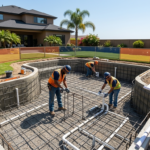 Construction escrow for pool builders secures the customer’s money up front and releases it phase by phase as you build — so you get paid through the busy season with your cash flow, and your reputation, protected.
 - What Is Construction Escrow? A Homeowner’s Guide to Protecting Your Money
 What is construction escrow? It’s a neutral third party that holds your renovation funds and releases them only for completed, verified work — so your money never moves ahead of the job. Here’s the plain-language homeowner’s guide.
 - How Contractors Can Avoid Payment Disputes on Every Job
 Avoid payment disputes before they start. A clear contract, written change orders, the right lien waivers, and milestone-based escrow make getting paid predictable — not adversarial. Here’s the contractor’s playbook.
 - Fix-and-Flip Renovations: How Investors Protect Their Capital With Escrow
 With flip margins at their thinnest since 2008, protecting your renovation capital is survival. Here’s how fix-and-flip investors use escrow to safeguard every dollar.
 - HOA Renovation Escrow: Protecting Association Funds on Major Projects
 When an HOA funds a major project, every reserve and special-assessment dollar is under scrutiny. HOA renovation escrow holds those funds neutrally and releases them only for verified work — protecting the money and the board.
 - Getting Paid on Commercial Tenant Buildouts
 Getting paid on commercial tenant buildouts is slow for a reason: more parties, and a TI allowance that’s reimbursed only after the work is done. Here’s why the money stalls — and how construction escrow secures it up front and pays you by verified milestone.
 - Construction Escrow vs. Title Company: What’s the Difference?
 They sound interchangeable, but construction escrow vs. title company is a distinction every property owner should understand before a renovation. A title company protects your ownership; construction escrow protects the money you hand your contractor. Here’s exactly what each one does — and which one safeguards your project funds.
 - Why HVAC Contractors Lose Money on Large Installs — and How Escrow Fixes It
 HVAC pros: you front the equipment, then wait 60–90 days to get paid. That gap is where your profit quietly disappears on big installs. Here’s how escrow closes it — and lets you take bigger jobs without betting your cash reserves
 - How Offering Escrow Helps Contractors Close Bigger Jobs Faster
 Most homeowners are not comparing contractors on price alone. They are comparing them on risk. They have read the horror stories — the vanished deposit, the half-finished kitchen, the money gone. So when you sit across from a prospective client, the quiet question in their mind is rarely just ‘How much?’ It is ‘Can I trust this person with a large sum of my money?’ Construction escrow lets you answer that question before they even ask it. Construction Escrow helps Contractors win more and better jobs.