People use the words “escrow” and “title” as if they mean the same thing, and in a home purchase they often work side by side. But when you line up construction escrow vs. title company, you are looking at two very different tools — and confusing them can leave your renovation money unprotected exactly when it matters most. Here is a clear breakdown of who does what, and which one actually safeguards the funds you are about to hand a contractor.
What a title company does
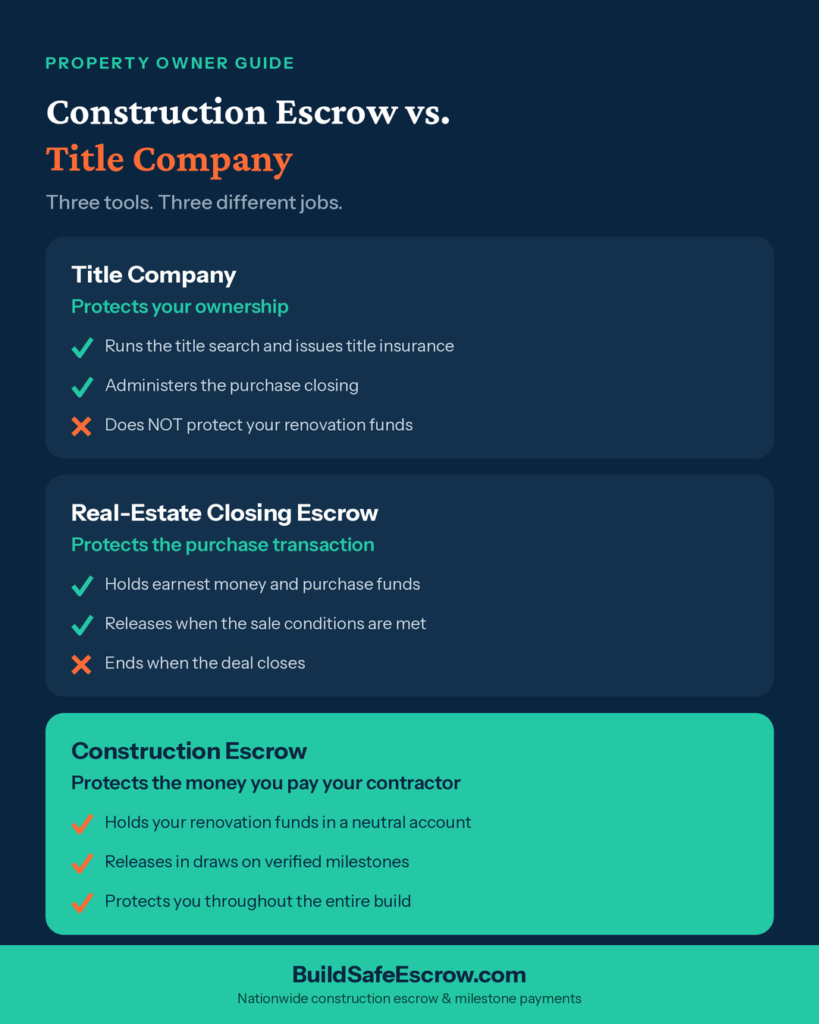
A title company’s job is centered on ownership. When you buy property, the title company researches the chain of ownership, searches public records for liens or defects, and issues title insurance that protects you and your lender against claims to the property later. In most transactions it also administers the closing itself — preparing documents, coordinating with the lender, and recording the deed. Its core product is certainty about who legally owns the property and protection if that ownership is ever challenged.
Many title companies also offer escrow services as part of a purchase. That is where the overlap — and the confusion — comes from.
What “escrow” means at a real-estate closing
In a home purchase, escrow usually refers to a neutral third party holding the buyer’s earnest money and related funds until the conditions of the sale are met. The escrow agent makes sure the contract is followed and that money goes to the right places at closing. It is a snapshot in time: it exists to safely move money and documents through a single transaction, and it ends when the deal closes.
So at a closing, the title company protects your ownership, and closing escrow protects the funds moving through that one transaction. Useful — but neither one follows your money into the renovation that comes next.
Construction escrow vs. title company: the real difference
Construction escrow is built for the build, not the purchase. Instead of holding funds for the moment of a sale, it holds your renovation or construction money throughout the entire project and releases it in stages as work is completed and verified. Your funds sit in a secure, neutral third-party account. The contractor is paid in draws — only after each agreed milestone is finished and confirmed.
The difference in purpose is the whole point of the construction escrow vs. title company question:
- A title company protects your right to own the property.
- Closing escrow protects the money moving through the purchase transaction.
- Construction escrow protects the money you spend turning that property into what you want — by tying every payment to verified progress.
If you buy a home and then renovate it, a title company and a closing escrow handled the purchase. But the moment you start writing checks to a contractor, you are in a new transaction with new risk — and that risk is precisely what construction escrow exists to cover. A clear title does nothing to stop a contractor from taking your deposit and disappearing. Construction escrow does.
Which one do you actually need?
It is not either/or. When you purchase a property, you will work with a title company and likely a closing escrow. When you renovate or build, you add construction escrow to protect those project funds. They solve different problems at different stages, and a smart owner uses the right tool for each.
The key takeaway on construction escrow vs. title company: do not assume that because a title company “handled escrow” at your closing, your renovation money is protected. It isn’t. The funds you are about to pay a contractor need their own safeguard — one that holds the money neutrally and releases it only against completed, verified work.
Frequently Asked Questions
Is construction escrow the same as a title company?
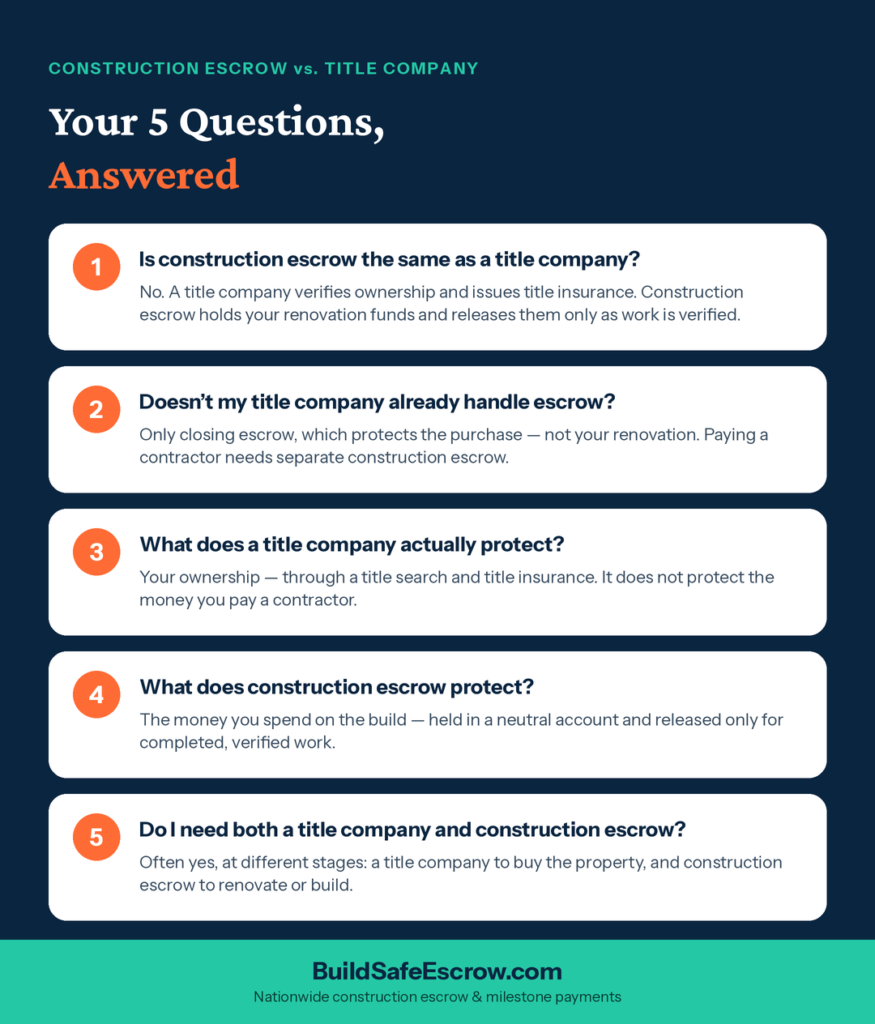
No. In the construction escrow vs. title company comparison, a title company verifies property ownership, issues title insurance, and typically administers the closing of a purchase, while construction escrow holds your renovation or construction funds and releases them in stages as work is completed and verified. They serve different purposes at different stages.
Doesn’t my title company already handle escrow?
At a purchase, a title company often handles closing escrow — holding earnest money and funds until the sale conditions are met. That protects the purchase transaction, not your renovation. Once you start paying a contractor, those funds need a separate construction escrow to protect them.
What does a title company actually protect?
Your ownership. It searches the chain of title for liens or defects and issues title insurance that protects you and your lender against future claims to the property. It does not protect money you later pay a contractor for construction work.
What does construction escrow protect?
The money you spend on the build. Funds are held in a neutral account and released to the contractor only as each milestone is completed and verified, so you never pay for work that isn’t done and a contractor can’t walk off with an up-front lump sum.
Do I need both a title company and construction escrow?
Often yes, but at different stages. You’ll typically use a title company and closing escrow to buy a property, then add construction escrow when you renovate or build. A clear title doesn’t protect your project funds, and construction escrow doesn’t verify ownership.
A clear title won’t protect the money you hand your contractor — construction escrow will. Build Safe Escrow holds your renovation funds in a secure, neutral account and releases them only for completed, verified work, nationwide. Schedule a free consultation to protect your project from the first payment on.