

Introduction: Dreams vs. Budgets
Every Florida homeowner has been there—imagining a bright, modern kitchen, a spa-like bathroom, or even a full home makeover. But before the first hammer swings, one question always surfaces: “What is the average home renovation cost in Florida?”
The truth? It’s not one-size-fits-all. Costs can vary drastically by location, project type, and finishes. And while knowing the averages matters, the bigger challenge is making sure your budget stays protected throughout the process. In this guide, we’ll break down average costs, hidden expenses, and the smartest way to safeguard your renovation funds in 2025.
Why Home Renovation Costs in Florida Vary
Florida is one of the busiest renovation markets in the country, driven by warm weather, aging housing stock, and a strong demand for updates after hurricanes and seasonal wear. But not every project is priced the same. Key factors include:
- Type of project: A kitchen remodel costs more per square foot than repainting or flooring.
- Size and scope: Square footage and complexity drive labor and material costs.
- Quality of finishes: Builder-grade vs. luxury appliances and materials can double or triple the budget.
- Location: A kitchen remodel in Miami will cost more than in Ocala due to labor rates and demand.
- Seasonal demand & supply chain: Costs rise during hurricane season or when material shortages hit.
- Permitting requirements: Florida’s strict building codes can add inspection fees and compliance costs.
Source: Garzone Construction highlights average construction costs per square foot in Florida, ranging from basic builds to luxury custom work (Garzone Construction).
Average Renovation Costs in Florida by Project
Here’s what homeowners should expect to pay in 2025:
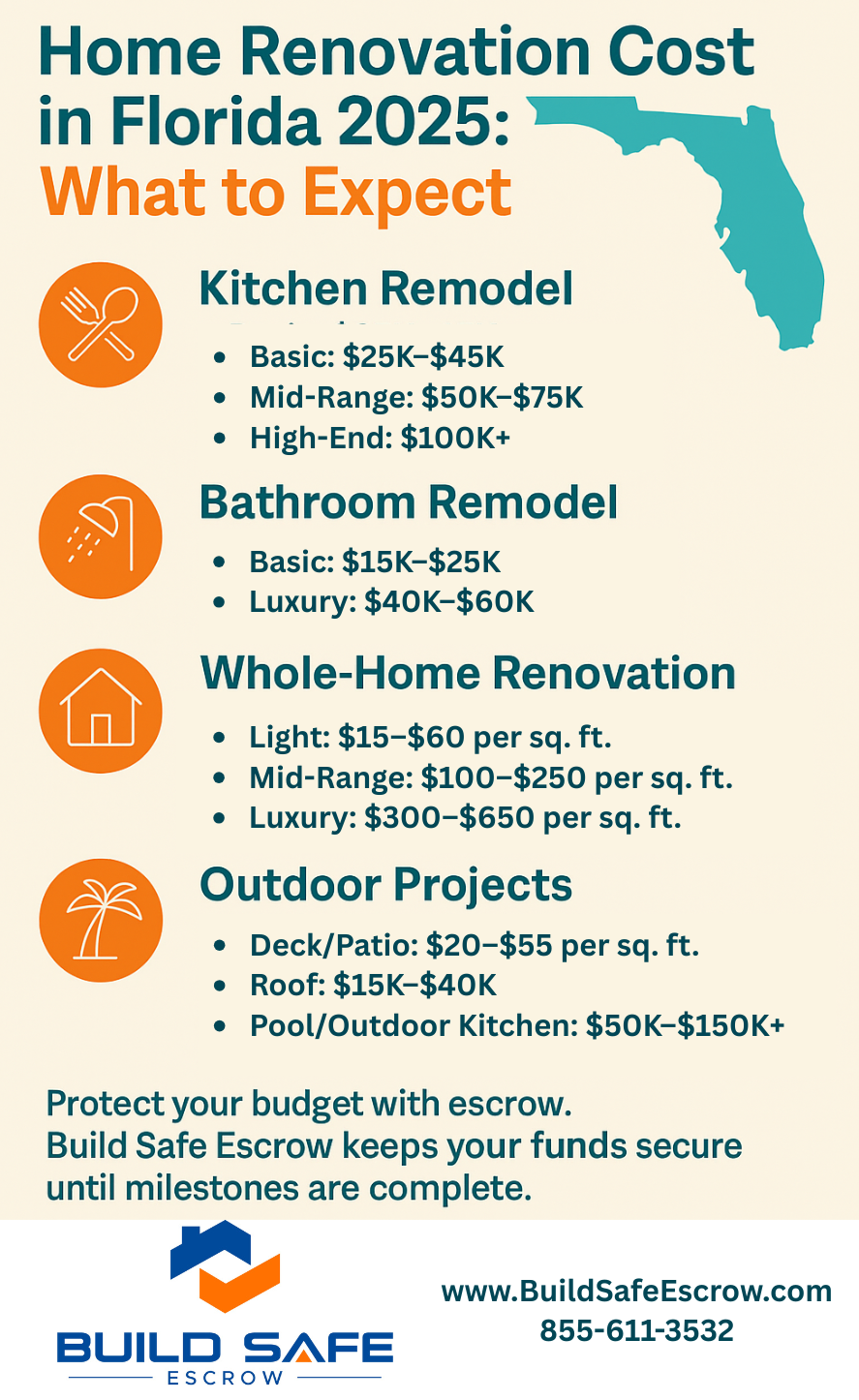
Kitchen Remodels
- Basic: $100–$150 per sq. ft. (~$25,000–$45,000 for a mid-sized kitchen)
- Mid-range: $175–$250 per sq. ft. (~$50,000–$75,000)
- High-end: $300+ per sq. ft. (~$100,000+)
In Miami, Sweeten reports the average kitchen remodel comes in around $175 per sq. ft. for mid-range upgrades (Sweeten).
Bathroom Remodels
- Basic update: $65–$100 per sq. ft. (~$15,000–$25,000)
- Luxury spa bath: $150+ per sq. ft. (~$40,000–$60,000)
Homeowners in Tampa often spend between $15,000 and $30,000 depending on finishes (ExtraSpace).
Whole-Home Renovations
- Light remodels (paint, flooring, fixtures): $15–$60 per sq. ft. (~$100,000+ for a 2,000 sq. ft. home)
- Mid-range remodels: $100–$250 per sq. ft. (~$200,000–$500,000)
- Luxury renovations: $300–$650 per sq. ft. (can exceed $1M for large Florida homes)
Benchmark Building Group reports Central Florida remodels ranging from $30,000–$90,000 for kitchens and $25,000–$60,000 for bathrooms (Benchmark Building Group).
Outdoor Projects
- Decks/patios: $20–$55 per sq. ft.
- Roof replacements: $15,000–$40,000 depending on materials and code requirements.
- Pools/outdoor kitchens: Often $50,000–$150,000+ in Florida.
Outdoor living is especially popular in Tampa and Miami, driving higher demand (ExtraSpace).
Hidden Costs Florida Homeowners Forget
Beyond contractor quotes, homeowners should budget for these:
- Permits & Inspections: Florida counties are strict; permits can cost hundreds to thousands.
- HOA/Condo approvals: Some communities require board sign-off.
- Temporary housing: If parts of the home are unlivable, hotels or rentals add costs.
- Code compliance upgrades: Hurricane-rated windows, impact doors, or roof reinforcements.
- Insurance & taxes: Certain improvements may affect insurance rates.
- Contingency buffer: Always set aside at least 10–20% for surprises.
How to Avoid Overpaying and Protect Your Budget
Knowing the home renovation cost in Florida is just step one. Protecting that budget is step two.
- Get multiple estimates: Always compare at least 3 licensed contractors.
- Verify licenses: Use Florida’s DBPR license lookup (DBPR License Search).
- Request detailed scopes: Ensure the contract lists milestones, not just lump sums.
- Avoid large upfront deposits: Florida law limits deposits for unlicensed contractors, but even with licensed pros, big upfronts are risky.
- Use escrow: By placing funds in escrow, money is released only when each milestone is completed. This protects homeowners from scams, delays, or incomplete work.
At Build Safe Escrow, we’ve seen too many Florida homeowners lose tens of thousands to projects that went sideways. Escrow is like a seatbelt for your renovation—keeping your funds secure no matter what surprises come up.
Florida Homeowner FAQ
Q: How much should I pay upfront to a contractor in Florida?
Ideally, no more than 10% for materials. With escrow, payments are tied to milestones, not trust alone.
Q: Does remodeling cost more in Miami than Orlando or Tampa?
Yes. Labor and demand are higher in Miami, so costs per sq. ft. trend upward.
Q: Can I finance my renovation?
Yes, through home equity loans, HELOCs, or contractor financing—but protect disbursements with escrow.
Q: How can I avoid scams?
Verify licenses, never pay in full upfront, and use escrow for fund protection.
Conclusion: Plan Smart, Protect Smarter
Florida is one of the most exciting (and challenging) places to renovate. From a simple bathroom refresh to a full home remodel, understanding the average home renovation cost in Florida is essential to setting a realistic budget.
But costs aren’t the only risk—mismanagement, scams, or life’s unexpected turns can derail even the best-planned project. That’s why escrow protection matters.
👉 Ready to protect your renovation? Download our free Homeowner’s Renovation Budget Guide or schedule a consultation with Build Safe Escrow today.
FAQ: Home Renovation Cost in Florida 2025
What is the average home renovation cost in Florida in 2025?
The average home renovation cost in Florida varies by project type and location. Kitchens often range from $25K–$100K+, bathrooms $15K–$60K, and whole-home remodels can start around $100K and go well beyond $500K depending on scope and finishes.
Why are renovation costs higher in Florida compared to other states?
What is the average home renovation cost in Florida in 2025?
The average home renovation cost in Florida varies by project type and location. Kitchens often range from $25K–$100K+, bathrooms $15K–$60K, and whole-home remodels can start around $100K and go well beyond $500K depending on scope and finishes.
How can I verify if my contractor is licensed in Florida?
You can check a contractor’s license through the Florida DBPR (Department of Business and Professional Regulation) license search tool. Always verify before signing a contract or making payments.
How much should I pay upfront to a contractor in Florida?
Industry best practice is no more than 10–20% upfront. To reduce risk, homeowners should consider milestone-based payments held in escrow, where funds are only released as work is completed.
What’s the best way to protect my renovation budget in Florida?
Beyond comparing estimates and building in a contingency, the smartest step is using escrow. Build Safe Escrow ensures your money stays secure in an FDIC-insured account and is only disbursed when agreed milestones are met.
Discover More on Our Blog
- ADU Construction Escrow: How Investors Fund a Backyard Build Only as the Work Gets Done
 Funding an ADU you rarely get to visit? ADU construction escrow ties every draw to a verified stage, from permits to final inspection, so your capital becomes a finished, rentable unit.
 - No Deposit Contractor? How to Start Work Without a Deposit and Still Get Paid
 Clients keep refusing big deposits, and starting unfunded is a risk no builder should carry. Here is how to skip the deposit, have the client fund escrow first, and get paid on verified milestones.
 - How to Set Up a Construction Escrow Account: A Homeowner’s Step-by-Step Guide
 Before you wire a renovation deposit, settle seven decisions, gather your documents and ask any provider five questions. This homeowner guide shows how to set up a construction escrow account in the right order.
 - HOA Roof Replacement Escrow: How Property Managers Protect Reserve Funds on the Biggest Job
 A roof is often the biggest check a board writes. Here is how property managers use milestone-based escrow to protect reserve funds, keep the roofer paid on time, and document every release.
 - Paying Cash to Build a House? How Homeowners Keep Control of Every Draw
 No construction loan means no bank inspector checking your draws. This guide shows how homeowners paying cash rebuild that structure, so money never moves ahead of the work.