The New Boomtown Story
Florida is on the edge of a transformation. With Governor DeSantis pushing to slash or even eliminate portions of property taxes, homeowners suddenly see extra room in their budgets. And just like that, the state starts to feel like a modern boomtown.
Neighborhoods buzz with new projects; contractors’ calendars fill months ahead; architects sketch late into the night. Renovations that once felt out of reach now feel possible. The hum of construction is everywhere; trucks lining driveways, permits taped to windows, lumber stacked on front lawns.
But every boomtown carries a shadow. Fast growth attracts everyone; the skilled, the hopeful, and the opportunists. For every reputable builder stepping into this new wave, there’s a pop-up “contractor” ready to disappear as quickly as they arrived.
So before Florida steps fully into this new era of explosive construction growth, one question becomes impossible to ignore:
Are we prepared to protect the homeowners and contractors who will be fueling it?
In this context, understanding the importance of construction escrow Florida becomes vital.
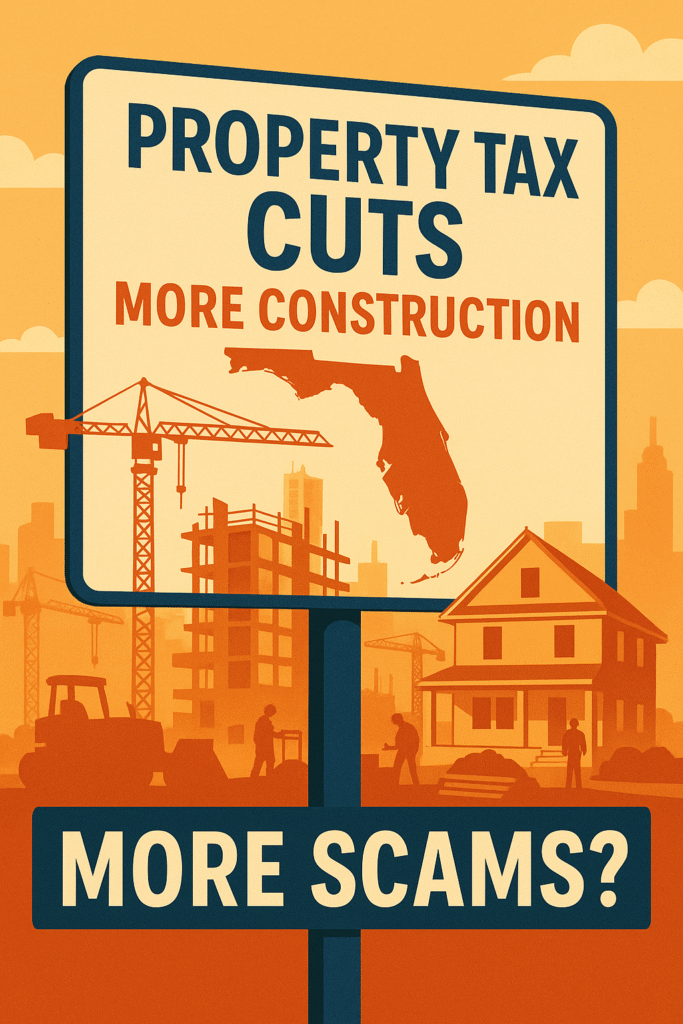
Tax Reform Will Spark More Construction — But That Also Means More Risk
Lower property taxes will unlock money for millions of property owners. And when people have more room in their budgets, they renovate, expand, upgrade, and build.
The excitement is real.
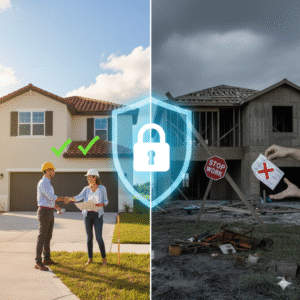
But history shows that a construction boom without financial safeguards creates the perfect environment for fraud, unfinished work, payment disputes, and contractor instability.
This is exactly why conversations about tax reform must include conversations about construction escrow Florida protections.
Because when more money flows into construction, the opportunities for scams grow just as fast.
Why Bigger Construction Waves Need Stronger Safeguards
During any major growth period, the market gets flooded with:
- Unlicensed “contractors” with no real track record
- Companies taking large deposits and never starting the job
- Subcontractors left unpaid when projects freeze
- Homeowners funding work with no oversight
- Contractors losing jobs to cheap bids backed by risky practices
And the moment those issues appear, both sides suffer.
That’s why construction escrow Florida solutions are not optional; they are foundational. They keep funds protected until the work is verified; they prevent mismanagement; they keep honest contractors competitive; and they reinforce trust in a market expanding faster than regulation can keep up.
What Happens When Tax Reform Isn’t Paired With Fund-Protection Reform
Without modern protections, Florida risks:
- A spike in renovation scams
- More abandoned houses mid-renovation
- Losses for seniors investing tax savings into home improvements
- Good contractors drowning in a wave of unreliable competitors
- More disputes tied to deposits, payment timing, and incomplete work
Tax reform is meant to empower homeowners. But empowerment without protection is a setup for chaos.
That’s why construction escrow Florida must evolve alongside the state’s tax policies.
How Construction Escrow Florida Protects Homeowners and Contractors in a Boom
Construction escrow works because it removes the biggest point of failure in any renovation: money moving too soon or without oversight.
A neutral third party holds the funds; they are released only when pre-agreed milestones are completed.
This means:
- Homeowners don’t lose deposits
- Contractors know money is secure and ready
- Projects stay on schedule
- Payment disputes decrease
- The entire renovation stays accountable
In a booming market filled with new players, this structure is invaluable.
If Florida Is Reimagining Property Taxes, It’s Time to Reimagine Construction Payments Too
Removing or reducing property taxes is a major step forward for affordability, investment, and home improvement.
But if Florida truly wants a safer, stronger, more resilient construction ecosystem, it also needs to rethink how renovation funds move.
Construction escrow Florida is the missing piece.
It fills the gap between tax relief and real-world project protection.
Because tax reform unlocks opportunity; escrow protects it.
A Call to Action for Homeowners, Contractors, and Policy Leaders
Now more than ever, homeowners should demand escrow-backed milestone payments before starting any project, especially as the state gears up for unprecedented construction activity.
Contractors who want to stand out in this fast-growing market should embrace escrow as the trust-building tool that sets them apart.
And policymakers discussing tax reform must also consider:
How do we protect residents from the downside of a construction boom?
The answer is simple:
Strengthen, normalize, and promote construction escrow Florida as the new standard for safe, transparent, and fair renovation.
Learn more about Construction Escrow and how to protect your construction or renovation projects www.BuildSafeEscrow.com
FAQs: Florida Property Tax Reform & Construction Protection
How will Florida’s property tax changes affect home renovations?
Lower or eliminated property taxes give homeowners more financial room to remodel, expand, or build. This creates a surge in renovation activity; however, with more construction comes higher risk of contractor fraud, unfinished work, or payment disputes. This is why pairing tax reform with construction escrow Florida protections is essential.
Why does a construction boom increase the chances of scams?
Rapid growth attracts honest builders and opportunists. During booms, unlicensed or unqualified contractors appear, targeting homeowners with upfront deposits and disappearing before work begins. Using construction escrow Florida prevents large deposits from being lost because funds stay protected until verified work is completed.
What is construction escrow and how does it work in Florida?
Construction escrow is a secure financial structure where renovation or building funds are held by a neutral third party. Money is released only after each agreed milestone is completed. For homeowners and contractors in Florida, construction escrow Florida ensures transparency, reduces disputes, and guarantees payments are tied to real progress.
Do contractors benefit from using construction escrow Florida?
Absolutely. Good contractors stand out instantly when they offer escrow-protected payments. In a crowded post–tax-reform market, escrow proves professionalism, reduces payment delays, avoids disputes, and gives clients the confidence to start projects sooner. It becomes a competitive advantage—not a burden.
Should escrow become part of Florida’s broader policy reform?
Yes. If Florida is reimagining property taxes, it should also modernize how construction funds move. Construction escrow Florida is the natural next step; it protects residents, stabilizes projects, and ensures that the benefits of tax reform aren’t overshadowed by a rise in scams or unfinished renovations.
- ADU Construction Escrow: How Investors Fund a Backyard Build Only as the Work Gets Done
 Funding an ADU you rarely get to visit? ADU construction escrow ties every draw to a verified stage, from permits to final inspection, so your capital becomes a finished, rentable unit.
 - No Deposit Contractor? How to Start Work Without a Deposit and Still Get Paid
 Clients keep refusing big deposits, and starting unfunded is a risk no builder should carry. Here is how to skip the deposit, have the client fund escrow first, and get paid on verified milestones.
 - How to Set Up a Construction Escrow Account: A Homeowner’s Step-by-Step Guide
 Before you wire a renovation deposit, settle seven decisions, gather your documents and ask any provider five questions. This homeowner guide shows how to set up a construction escrow account in the right order.
 - HOA Roof Replacement Escrow: How Property Managers Protect Reserve Funds on the Biggest Job
 A roof is often the biggest check a board writes. Here is how property managers use milestone-based escrow to protect reserve funds, keep the roofer paid on time, and document every release.
 - Paying Cash to Build a House? How Homeowners Keep Control of Every Draw
 No construction loan means no bank inspector checking your draws. This guide shows how homeowners paying cash rebuild that structure, so money never moves ahead of the work.