
You’ve saved for years. You’ve pinned inspiration boards, toured model homes, and finally found a contractor who seems trustworthy. You shake hands, sign a contract, and wire over a large deposit — sometimes $20,000, $50,000, or more. To ensure a smooth renovation process and to protect your home renovation funds, it’s crucial to follow certain steps.
Then things start to go sideways.
Maybe the work slows down without explanation. Maybe the contractor stops showing up. Maybe they ask for more money before the last milestone is even finished. And maybe — in the worst cases — they disappear entirely.
This isn’t rare. According to the Federal Trade Commission, home improvement fraud is one of the top consumer complaints filed every year in the United States. Thousands of homeowners lose tens of thousands of dollars annually on renovations that go wrong.
The good news: most of this is preventable. Here’s exactly what to do before you sign anything.
Understanding how to protect your home renovation funds is essential for any homeowner planning a project.
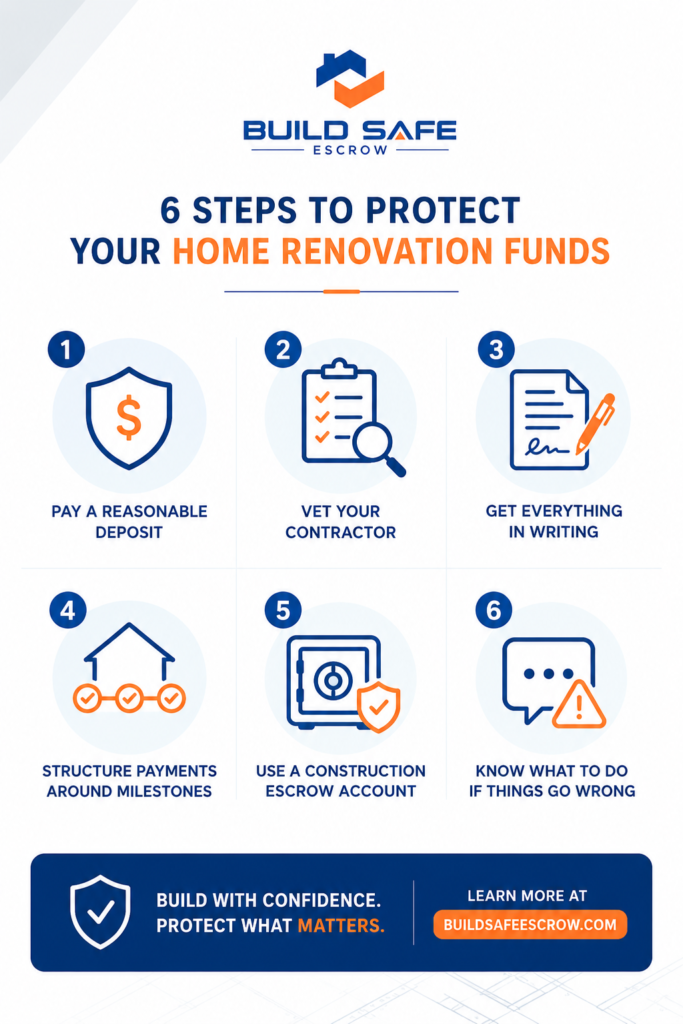
1. Never pay more than 10–15% upfront
One of the clearest warning signs of a contractor problem is the request for a massive deposit before work begins. Legitimate contractors understand that large upfront payments are a risk to you — and they don’t need all your money before they’ve earned it.
A reasonable deposit covers materials and mobilization costs. It does not cover the full first phase of work, and it certainly doesn’t cover work that hasn’t happened yet.
| Rule of thumb: In most states, 10% upfront is standard. In Florida, contractors are legally limited to 10% deposits for projects over $2,500. If a contractor asks for 30%, 40%, or 50% upfront — that’s a red flag worth taking seriously. |
2. Vet your contractor before you commit
A license number and a nice website are not enough. Before signing anything, do the following:
- Check their contractor license on your state’s licensing board website
- Search their business name on your county court records for lawsuits or claims
- Look them up on the Better Business Bureau and check for unresolved complaints
- Ask for three references from jobs completed in the last 12 months — then actually call them
- Verify their insurance certificate directly with their insurer, not just a copy they provide
Many homeowners skip these steps because they feel awkward. Don’t. A contractor who is legitimate will welcome your due diligence — it shows you’re a serious client.
3. Get everything in writing — and read it
Your contract is your protection. It should include, at minimum:
- A detailed scope of work — not just ‘kitchen remodel’ but exactly what is included and excluded
- A payment schedule tied to specific milestones, not to dates or percentages of elapsed time
- A start date and estimated completion date with penalties for delays
- A change order process that requires written approval before any additional cost is incurred
- A lien waiver clause requiring the contractor to provide waivers when subcontractors are paid
If a contractor presents you with a one-page contract or a handwritten estimate and says ‘trust me,’ walk away. Professionalism starts with paperwork.
4. Structure payments around milestones — not trust
This is the single most important thing you can do to protect your renovation funds.
Traditional payment structures — upfront deposit, progress payments on a schedule, final payment on completion — create enormous risk for you. The contractor is always working with your money before the work is finished.
Milestone-based payments flip this dynamic. Instead of paying based on time or trust, you pay based on verified progress. Framing is done → payment released. Electrical rough-in complete → next payment released. Final inspection passed → final draw released.
| What this means for you: You never pay for work that hasn’t happened. If the contractor stops showing up, your unspent funds stay with you — not with them. This single structural change eliminates most renovation fraud before it starts. |
5. Use a construction escrow account
Even with a great contract and milestone-based payments, there’s still a gap: who enforces it?
Construction escrow closes that gap. Instead of paying the contractor directly, you deposit your renovation budget into a neutral, FDIC-insured account held by a third party — an escrow company. The escrow company only releases funds when milestones are verified and you approve the payment.
The benefits are significant:
- Your funds are held securely and cannot be accessed by the contractor without your approval
- Payments are tied to documented progress — not to invoices or requests
- If a dispute arises, money stays protected while it’s resolved
- Subcontractors and vendors can be paid directly, reducing your risk of mechanic’s liens
- The contractor is incentivized to finish each phase correctly because their payment depends on it
Construction escrow is no longer just for large commercial projects. Build Safe Escrow was founded specifically to make this level of financial protection accessible for homeowners, HOA managers, and contractors on projects of all sizes — from bathroom remodels to full home builds.
6. Know what to do if things go wrong
Even with every precaution in place, construction doesn’t always go to plan. Here’s how to handle problems before they become disasters:
- Document everything in writing — use email or text rather than phone calls so you have a paper trail
- Send a formal written notice if the contractor is behind schedule or not performing
- Do not release payments for incomplete work, even under pressure
- Contact your state contractor licensing board if you believe violations have occurred
- If funds are held in escrow, notify your escrow company — they can hold disbursement while disputes are resolved
The homeowners who recover from renovation disasters fastest are always the ones who documented progress, controlled payments, and had a neutral third party holding their funds.
The bottom line
Home renovations are one of the largest financial investments you’ll ever make. Protecting that investment isn’t about being suspicious of every contractor — it’s about building the kind of structure that makes trust unnecessary.
When your funds are held in escrow, when payments are tied to milestones, and when a neutral third party is managing disbursements, you don’t need to hope your contractor does the right thing. The system ensures they do.
| Ready to protect your renovation? Build Safe Escrow holds your renovation funds securely and releases payments only when milestones are met. Flat fee, FDIC-insured accounts, and over 10 years of experience. Get a free quote at buildsafeescrow.com it takes less than 5 minutes. |
Frequently Asked Questions on How to Protect Your Home Renovation
What is construction escrow?
Construction escrow is a neutral third-party service that securely holds renovation funds in an FDIC-insured account and releases payments only when agreed-upon project milestones are completed and approved. This helps protect both homeowners and contractors throughout the project
Why should homeowners avoid large upfront payments?
Large upfront payments increase the risk of financial loss if the contractor delays work, abandons the project, or requests additional money before completing agreed work. Structuring payments around completed milestones helps ensure you only pay for verified progress.
How much should I pay a contractor upfront?
In many states, 10–15% is considered a reasonable upfront deposit to cover initial materials and mobilization costs. In some states, including Florida and California, laws may limit upfront deposits for certain projects. Always verify local regulations before signing a contract.
What are milestone-based payments?
Milestone-based payments divide the project into phases. Payments are released only after each stage is completed and approved. For example:
Demolition completed
Framing completed
Electrical rough-in approved
Final inspection passed
This structure helps reduce disputes and protects your renovation budget.
How does construction escrow protect homeowners?
Construction escrow protects homeowners by:
Keeping funds secure until work is completed
Preventing contractors from accessing money early
Creating accountability through milestone approvals
Reducing the risk of contractor abandonment
Helping prevent payment disputes and mechanic’s liens
Does using escrow mean I don’t trust my contractor?
No. Construction escrow is designed to create transparency and structure for everyone involved. Even experienced and trustworthy contractors can face unexpected issues such as illness, labor shortages, supplier delays, or financial difficulties. Escrow creates a safer process for both parties.
Can small renovation projects use escrow?
Yes. Construction escrow is no longer limited to large commercial projects. Homeowners now use escrow for bathroom remodels, kitchen renovations, roofing projects, additions, and even smaller repair jobs.
What happens if there is a dispute during the project?
If a dispute arises, escrow funds remain protected until the issue is reviewed and resolved. This prevents premature payments and gives both parties time to address concerns without immediately risking the remaining project funds.
How do I verify if a contractor is legitimate?
Before hiring a contractor, homeowners should:
Verify the contractor license with the state licensing board
Check for lawsuits or complaints
Contact recent references
Confirm insurance coverage directly with the insurer
Review online ratings and business history
Managing funds through third party construction escrow like Build Safe Escrow
Taking these steps can significantly reduce renovation risk.
Can escrow help prevent mechanic’s liens?
Yes. Many escrow arrangements include direct payments to subcontractors and suppliers along with lien waiver collection. This helps reduce the risk of unpaid subcontractors filing mechanic’s liens against the property.
Is construction escrow only for homeowners?
No. Build Safe Escrow acts as a neutral third party so Contractors, builders, HOA managers, condo associations, architects, and developers also use construction escrow to create payment transparency and improve trust during projects.
How long does it take to set up a construction escrow account?
Most construction escrow accounts can typically be set up within a few business days once the project details, agreement, and funding information are provided.