
Most homeowners who get burned by contractors didn’t hire someone who seemed shady from the start. They hired someone who seemed perfectly reasonable — until the problems began. The warning signs were there. They just didn’t know what to look for. Here are five renovation red flags that — if you see them — should stop you from signing any contract.
Red Flag #1: They Ask for More Than 15% Upfront
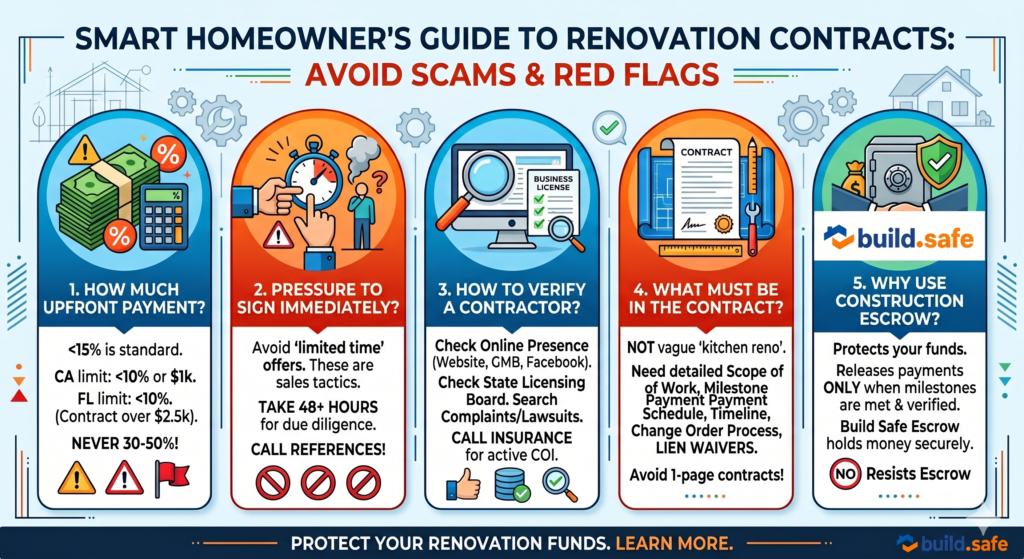
Legitimate contractors have credit lines, supplier relationships, and working capital. They don’t need 40% of your project budget to buy materials before work begins. Large upfront deposits are the #1 mechanism for renovation fraud — they get the money, do minimal work, and disappear.
- In Florida, state law caps deposits at 10% for contracts over $2,500
- In California, down payments are limited to $1,000 or 10%, whichever is less
- No state requires you to pay 30–50% before a shovel touches dirt
| Key insight: What to say: ‘We’ll structure payments around milestones. I’m using a construction escrow account to hold the funds — you’ll be paid as each phase is completed and verified.’ |
Red Flag #2: They Pressure You to Decide Immediately
The ‘limited time offer’ that expires at the end of the conversation is a sales manipulation tactic, not a real constraint. No legitimate material price or labor availability disappears in 24 hours. High-pressure closing tactics are designed to prevent you from doing due diligence — because the contractor knows due diligence would eliminate them.
Take a minimum of 48 hours to review any contract. Get a second bid. Call their references. Check their license. A contractor who won’t wait 48 hours is a contractor who has something to hide.
Red Flag #3: They Have No Verifiable Online Presence
In 2026, every legitimate contractor has a Google Business Profile, a website, or at minimum a Facebook page with reviews. If a contractor who claims to be in business for 5+ years has zero online presence, zero reviews, and nothing you can verify independently — that is not normal. It is a warning.
- Search their business name + city + ‘reviews’
- Search their name on your state’s contractor licensing board website
- Search their name + ‘complaints’ or ‘lawsuit’
- Ask for a certificate of insurance and call the insurance company to verify it’s active
Red Flag #4: The Contract Is Vague or Missing
A vague contract is not just poor practice — it is a legal and financial liability for you. If the contract says ‘kitchen renovation, $68,000’ with no scope detail, no milestone schedule, no change order process, and no timeline — you have no recourse when things go wrong.
| Important: A one-page contract for a six-figure renovation is not a contract. It is an invitation to a dispute. Insist on a detailed scope, a milestone payment schedule, a change order clause, and a lien waiver requirement before you sign anything. |
Red Flag #5: They Resist Using Construction Escrow
This is the least obvious red flag — and possibly the most important. When you suggest using a construction escrow company to hold and disburse project funds, a contractor’s reaction tells you almost everything.
A contractor with nothing to hide will say: ‘That’s fine — I’ve worked with escrow companies before, it’s very professional.’
A contractor with something to hide will say: ‘We don’t do that. It’s too complicated. You just need to trust me.’
Trust is not a payment system. Escrow is. Choose accordingly.
| Ready to get started? Before you sign your next renovation contract, protect your funds with Build Safe Escrow. We hold your money securely and release payments only when milestones are met. Get a free consultation at buildsafeescrow.com/contact. |
Frequently Asked Questions (FAQs) about 5 Renovation Red Flags Every Homeowner Must Know Before Signing Anything
How much should a contractor ask for upfront?
Legitimate contractors typically do not need more than 15% of your project budget upfront. In many places, large deposits are restricted by law. For example, California limits down payments to $1,000 or 10% (whichever is less), and Florida caps deposits at 10% for contracts over $2,500. You should never pay 30–50% before work even begins.
Is it a red flag if a contractor pressures me to sign immediately?
Yes. A “limited time offer” that expires within 24 hours is a manipulation tactic designed to stop you from doing proper due diligence. Legitimate material prices and labor availability do not disappear overnight. You should always take a minimum of 48 hours to review a contract, check references, and verify licenses.
How can I verify if a home renovation contractor is legitimate?
Any established contractor should have a verifiable online presence, such as a website, a Google Business Profile, or a Facebook page with reviews. To verify them, search for their business name plus “reviews,” check your state’s contractor licensing board, search for any past lawsuits or complaints, and always call their insurance company to verify their certificate of insurance is active.
What needs to be included in a home remodeling contract?
A vague, one-page agreement is an invitation to a dispute. Before signing, ensure your contract includes a highly detailed scope of work, a specific milestone payment schedule, a clear timeline, a change order process, and a lien waiver requirement.
How does a construction escrow account protect my renovation budget?
A construction escrow account protects your funds by holding the project money securely and only releasing payments to the contractor as specific, verified project milestones are completed. If a contractor resists using an escrow service like Build Safe Escrow and demands you “just trust them,” it is a major red flag that you should walk away.
Related Posts

How to Protect Your Home Renovation Funds: The Honest Guide Every Homeowner Needs Before They Sign Anything

Burned by a Contractor? How Construction Escrow Finally Protects Homeowners from Renovation Nightmares