
The High Stakes of Home Renovations in Florida
If you’re planning a renovation, you’re probably excited about turning your vision into reality. But here’s the sobering truth: Florida is one of the top three states where homeowners face contractor scams. Families lose thousands — sometimes millions — to unlicensed builders or contractors who take deposits and vanish.
The Florida Department of Business & Professional Regulation (DBPR) logged nearly 10,000 complaints in a single year, many tied to unlicensed activity. News outlets have labeled it a “billion-dollar problem”, pointing to lawsuits like the Pineapple Corporation case in St. Johns County, where homeowners alleged $15 million in deposits were taken with little to show for it.
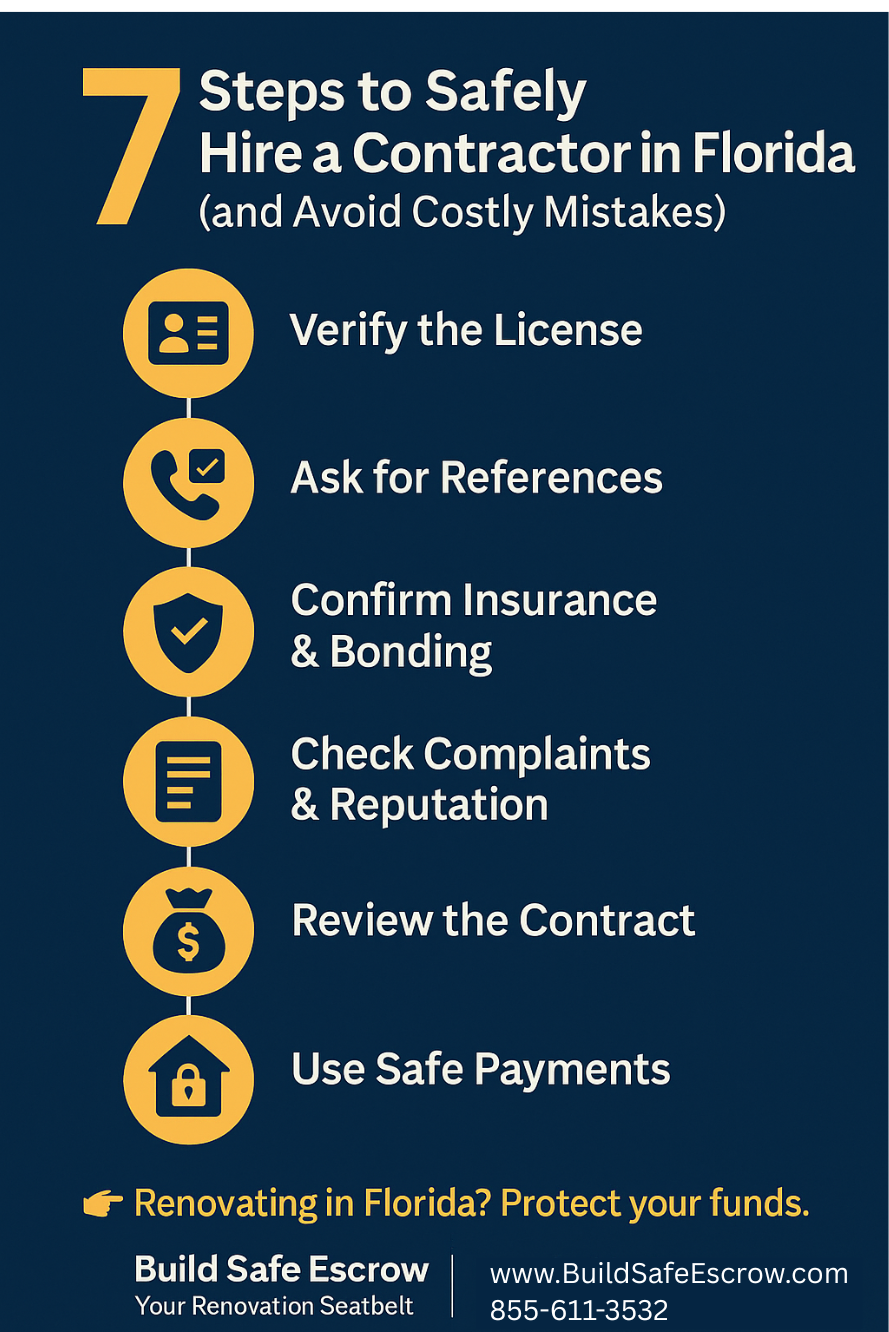
This doesn’t mean you can’t renovate safely; it means you must be diligent when you hire a contractor in Florida. Below are the seven essential steps to protect your investment — and your peace of mind while ensuring you hire a contractor in Florida who is reputable.
Step 1: Verify the Contractor’s License
Before you hire a contractor in Florida, check their license. All contractors in the state must be licensed through the DBPR to ensure you are making a safe choice when you hire a contractor in Florida.
- How to check: Use the DBPR’s online license portal and confirm that the license is active and current.
- What to avoid: Contractors who claim licensing isn’t necessary or dodge the question.
- Why it matters: Licensed contractors are insured, vetted, and accountable under Florida law.
👉 Pro tip: A legitimate contractor will proudly display their license number on contracts, ads, and job sites.
Step 2: Ask for References and Inspect Past Work
A shiny website isn’t enough. To safely hire a contractor in Florida, insist on seeing past projects.
- Request at least three recent references.
- Call past clients and ask about communication, timeliness, and budget.
- If possible, drive by completed work to see quality firsthand.
This step helps separate seasoned professionals from those who just know how to sell.
Step 3: Confirm Insurance and Bonding
When you hire a contractor in Florida, always ask for proof of insurance:
- General Liability Insurance – covers property damage.
- Workers’ Compensation Insurance – protects you if a worker is injured on your property.
- Bonding – adds another layer of financial protection.
Without insurance, you could end up liable for injuries or accidents during the project.
Step 4: Check for Complaints and Red Flags
Even licensed contractors can have a history of problems. Before you hire a contractor in Florida, research their reputation:
- Search the DBPR complaint records.
- Look up their name on the Better Business Bureau.
- Check online reviews — but read them critically (patterns of complaints matter more than one bad review).
👉 Red flags: lawsuits, unresolved disputes, or multiple clients complaining about similar issues like unfinished work or surprise charges.
Step 5: Review Contracts in Detail
Contracts protect you — but only if they’re clear. When you hire a contractor in Florida, ensure the contract includes:
- A detailed scope of work.
- Start and completion dates.
- Material specifications.
- Payment schedule tied to milestones, not vague promises.
Warning: Florida law has restrictions on deposits. If a contractor asks for a very large upfront payment, that’s a red flag.
Step 6: Use Safe Payment Methods
This is where most homeowners get trapped. Handing over a big deposit exposes you to risk. To safely hire a contractor in Florida, avoid paying cash or large sums upfront.
The safest method? Escrow.
- Funds are held in a neutral, FDIC-insured account.
- Money is released only when work is completed and approved.
- Both homeowner and contractor are protected from mismanagement, scams, or unexpected life events.
Think of escrow as the seatbelt for your renovation — you hope you won’t need it, but you’ll be glad it’s there if anything goes wrong.
Step 7: Protect Your Renovation with Escrow
Even the best contractors can face challenges: accidents, illnesses, supply chain delays, or economic setbacks. By choosing escrow when you hire a contractor in Florida, you protect your project from both dishonesty and unpredictability.
At Build Safe Escrow, we specialize in milestone-based payment protection:
- Funds stay safe until work is verified.
- Contractors get paid on time, improving trust.
- Homeowners avoid scams and unfinished projects.
It’s not about distrust — it’s about building trust the smart way.
Renovate With Confidence
Hiring a contractor in Florida doesn’t have to feel like a gamble. By verifying licenses, checking references, confirming insurance, reviewing contracts, and securing payments through escrow, you can confidently move forward with your renovation.
Don’t leave your hard-earned savings to chance. The safest way to hire a contractor in Florida is to back your project with escrow — giving you peace of mind from the first payment to the final walkthrough.
👉 Ready to protect your renovation? Learn how Build Safe Escrow works.
FAQs: How to Hire a Contractor in Florida
How do I verify a contractor’s license before I hire a contractor in Florida?
You can verify a contractor’s license through the Florida DBPR (Department of Business & Professional Regulation) website. Enter the contractor’s name or license number to confirm it’s active and valid. If you plan to hire a contractor in Florida, this should always be your first step.
What deposit should I pay when I hire a contractor in Florida?
Florida law limits large upfront deposits, but many homeowners don’t realize this. A safe rule is to avoid paying more than 10% upfront. To be fully protected, place payments into escrow so funds are only released as work is completed.
What are red flags when trying to hire a contractor in Florida?
Be cautious if a contractor:
Refuses to share their license number.
Demands full payment upfront.
Offers vague or verbal-only contracts.
Has repeated complaints with DBPR or BBB.
These are all signs you should not hire a contractor in Florida without further research
How do I protect myself from contractor scams when I hire a contractor in Florida?
The safest approach is to use escrow with milestone-based payments. This ensures your money stays protected until work is verified. Even if a contractor faces unexpected delays or issues, your funds remain secure.
Why should I use escrow when I hire a contractor in Florida?
Escrow acts as a neutral safety net for both homeowners and contractors. Funds are held securely in an FDIC-insured account, and payments are released only when agreed milestones are completed. This builds trust, prevents fraud, and keeps projects on track.
- Home Renovation Cost in 2026: What Owners Should Budget, State by State
 What a renovation really costs in 2026, why the same kitchen is priced differently in Texas and New York, and how owners keep every dollar tied to finished work.
 - Construction Escrow for Contractors: How It Works and How You Get Paid
 Escrow from the contractor’s seat: proof the money exists before you start, a milestone schedule you help write, and payment that arrives on verification instead of on a promise.
 - How Construction Escrow Works: A Simple Guide for Property Owners
 A plain walkthrough of how construction escrow works for homeowners funding a renovation or build: where the money sits, when it moves, and what happens if a contractor stops.
 - Construction Escrow for Property Managers: How It Works, Simplified
 A plain walkthrough of construction escrow for property managers: how funds are held, how milestones get verified, and how the whole thing becomes a report your owners can read.
 - Property Manager Vendor Payments: How to Pay Contractors Across a Portfolio Without Carrying the Risk
 A property manager’s guide to paying contractors and vendors across a portfolio without becoming the one who absorbs the risk: verified releases, lien protection, and a structure that keeps owner funds separate and accountable.