When you’re planning a renovation or new build, the excitement of design boards and finish selections can easily overshadow the less glamorous paperwork. Yet the truth is this: construction contracts decide the fate of your project.
I’ve spoken with countless property owners who thought a handshake or a quick one-page agreement was enough. But construction projects are complex, involve multiple trades, and move through many phases. Without clear, fair construction contracts, trust alone won’t protect you from unexpected costs, disputes, or even unfinished work.
So before you sign anything, slow down and use this guide. Here’s exactly what to look for in construction contracts — and the critical questions you should always ask.
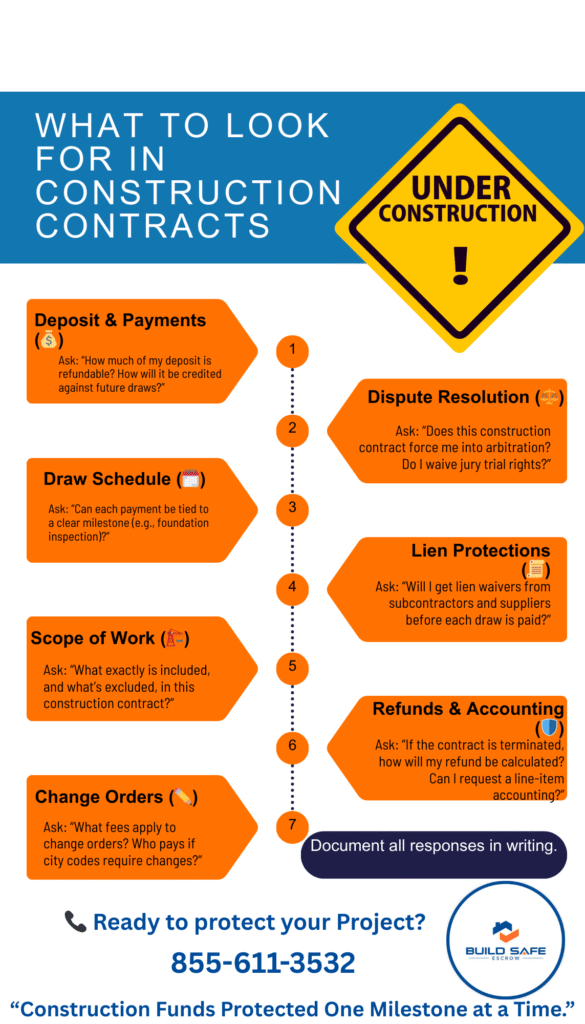
1. Deposits and Payment Terms in Construction Contracts
One of the first things to review in any construction contract is how much money is required upfront and how that deposit is handled.
- What to look for:
- How much of the deposit is refundable if the project is delayed or canceled.
- Whether the deposit is applied to the total contract amount or treated as a separate fee.
- Any penalties tied to withholding or delaying payment.
- Questions to ask:
- “If the project doesn’t move forward, how much of my deposit is refundable?”
- “How exactly will my deposit be credited against future draws?”
- “Can deposits be placed in a neutral escrow account instead of being paid directly?”
Pro Tip: A fair construction contract should tie deposits to measurable work and not make them vanish as “non-refundable fees.”
2. Draw Schedules in Construction Contracts
Payment timing is just as important as payment amounts. Many disputes come from vague or front-loaded draw schedules that don’t align with actual work.
- What to look for:
- Clear milestone-based draws tied to inspections or defined deliverables.
- A schedule that prevents overpayment before work is complete.
- Questions to ask:
- “Can each draw be tied to a milestone, such as foundation inspection or framing sign-off?”
- “Will you provide lien releases from subcontractors before each draw is paid?”
A good construction contract ensures your money moves at the same pace as your project.
3. Scope of Work in Construction Contracts
Contracts live or die on clarity. Too often, scope of work sections in construction contracts are either overly vague or leave out critical exclusions.
- What to look for:
- Specific details about labor, materials, and responsibilities.
- Explicit exclusions (e.g., landscaping, permits, or specialty finishes).
- Questions to ask:
- “Can you provide a line-item breakdown of labor and materials?”
- “What responsibilities are mine as the property owner versus yours as the contractor?”
If a construction contract leaves you unsure about “who does what,” you’re setting the stage for conflict later.
4. Change Orders in Construction Contracts
Change orders are inevitable. The question is whether your contract makes them predictable or painful.
- What to look for:
- Clear process and fees for initiating a change order.
- Language that prevents runaway costs if city codes require changes.
- Questions to ask:
- “What is the administrative fee for each change order?”
- “If the city or inspectors force a change, how are those costs handled?”
Well-written construction contracts make the change process transparent and fair to both sides.
5. Dispute Resolution in Construction Contracts
When disputes happen — and they often do — your construction contract decides where you’ll end up: mediation, arbitration, or court.
- What to look for:
- Whether disputes go straight to arbitration (and if so, where).
- Who pays attorney’s fees in the event of a dispute.
- Questions to ask:
- “Is arbitration mandatory or optional?”
- “If arbitration is required, do I waive my right to a jury trial?”
Some construction contracts are written to favor the contractor here, so pay close attention.
6. Lien Protections in Construction Contracts
Florida and many other states give subcontractors and suppliers lien rights even if you’ve already paid the GC. That means if your GC doesn’t pay their subs, your property could still be liened.
- What to look for:
- Clear acknowledgment of lien law responsibilities.
- A requirement for lien releases before each payment.
- Questions to ask:
- “Will you provide conditional/unconditional lien waivers before each draw?”
- “What safeguards do you use to ensure subs and suppliers are paid on time?”
Strong construction contracts protect you from paying twice for the same work.
7. Refunds and Accounting in Construction Contracts
Too many agreements lack language about refunds or accounting. This leaves owners in a weak position if the project is terminated early.
- What to look for:
- Refund policies in case of termination.
- Obligations for the contractor to provide a line-item accounting of funds spent.
- Questions to ask:
- “If I terminate the contract early, how will my refund be calculated?”
- “Can you provide a detailed accounting of deposits and draws if requested?”
Florida law, for example, allows you to request an accounting from licensed contractors. If your construction contract doesn’t mention it, add it.
8. Escrow as a Safety Net for Construction Contracts
One of the most powerful tools owners overlook is construction escrow.
- What to look for:
- Willingness from the GC to use a third-party escrow account.
- A clear, milestone-based release schedule.
- Questions to ask:
- “Are you open to using escrow to protect both parties?”
- “Will funds only be released when milestones are independently verified?”
Escrow transforms construction contracts from trust-based to performance-based.
🛡️ Final Word: Protect Yourself Before Problems Start
At the end of the day, construction contracts are not a formality — they are the foundation of your protection. If a contractor pushes for large deposits with vague refund terms, resists escrow, or avoids details about scope and draws, those are red flags.
The smartest move? Slow down before you sign. Ask questions, demand clarity, and insist on safeguards like escrow and lien waivers. These small steps upfront can prevent major losses later.
At Build Safe Escrow, we help property owners, contractors, and HOAs protect project funds through FDIC-insured escrow accounts with milestone-based disbursements. Whether you’re building, renovating, or managing community projects, our mission is simple: make construction contracts safer, clearer, and fairer for everyone involved.
👉 Want to explore escrow options for your project?
Contact Build Safe Escrow for a free consultation. Let’s help you manage repairs and renovations with confidence, structure, and complete transparency.
📞 Call us at (855) 611-3532
🌐 Visit www.buildsafeescrow.com
Ready to Go Deeper? Grab Our Free Guides:
🏡 For Property Owners:
Renovate Smarter: How to Protect Your Project Funds
Discover how to avoid common renovation pitfalls, protect your money, and choose the right contractor with confidence.
📥 Download the free guide
👷 For Contractors:
Win More Jobs with Escrow: A Contractor’s Guide to Securing Projects and Payments
Learn how offering escrow-backed bids can help you stand out, get paid faster, and build a reputation for professionalism.
📥 Download the contractor guide
➕ More Resources from Build Safe Escrow:
🚧 How to Protect Your Construction Funds, Even with a Great Contractor
📄 The One Agreement That Can Save Your Renovation—and You Don’t Need a Lawyer to Use It
🛑 Construction Disputes Are Costly—Here’s How Escrow Solves Them
What to Look for in Construction Contracts (and What to Ask Before You Sign) – FAQs
What are the key things to look for in a construction contract?
You should carefully review several critical sections, including:
Deposits and Payment Terms: Understand how much is required upfront, how it’s applied, and if it’s refundable.
Draw Schedules: Ensure payments are tied to specific, measurable project milestones and not over-front-loaded.
Scope of Work: The contract should clearly and specifically detail all labor, materials, and responsibilities for both the contractor and the property owner.
Change Orders: A clear process for handling and pricing inevitable changes is essential to prevent unexpected costs.
Dispute Resolution: Know whether disputes will be handled through mediation, arbitration, or court, and who is responsible for legal fees.
Lien Protections: Look for language requiring the contractor to provide lien releases from all subcontractors and suppliers to protect you from paying for the same work twice.
How do I know if the deposit and payment terms are fair?
A fair contract ties deposits to measurable work and doesn’t treat them as “non-refundable fees.” You should ask how much of the deposit is refundable if the project is delayed or canceled and how it will be credited against future draws. A “pro tip” is to ask if the deposit can be held in a neutral escrow account to protect both parties.
Why is the “scope of work” section so important?
This section is the foundation of the entire project. If it’s vague or omits critical details, it can lead to disputes and unexpected costs later. You should ask for a line-item breakdown of labor and materials and a clear list of what the contractor is responsible for versus your responsibilities as the property owner.
What are “lien protections” and why do I need them?
In many states, if a general contractor (GC) doesn’t pay their subcontractors or suppliers, those parties can place a lien on your property, even if you’ve already paid the GC in full. Strong contracts require the contractor to provide lien releases or waivers from all subcontractors and suppliers before you make each payment, ensuring you are protected from this risk.
How can using escrow protect me in a construction project?
Construction escrow is a powerful tool where a neutral third-party holds project funds. Money is only released to the contractor when specific, independently verified project milestones are met. This transforms the contract from being based on trust to being based on verified performance, providing a strong safety net for the property owner and the contractor.