
Trust is the foundation of every construction project. It’s what makes a homeowner comfortable handing over a check and what gives a contractor confidence to order materials and put crews on site. But here’s the truth no one talks about: trust alone can’t protect your renovation.
Even when you hire the best contractor in town—someone with 40 years of experience, five-star reviews, and a waiting list six months long—life can still throw a curveball. And when it does, trust won’t pour the concrete, hang the drywall, or finish the dream kitchen you’ve been waiting for.
A Story That Feels Too Familiar
Let’s step into the shoes of a Florida family in 2021. They finally saved enough to build their dream pool: a 12×24 saltwater pool with water heater, jets, and a sleek modern deck. The contractor they hired was a respected, family-owned company. Everyone in the neighborhood swore by them. Their reputation was bulletproof.
The contract seemed standard:
- 40% upfront before excavation,
- 30% after digging,
- 20% after concrete,
- 10% upon completion.
Permits were pulled. Materials were ordered. Work was about to begin.
Then, out of nowhere, the contractor had a stroke. Operations shut down overnight. Crews were laid off. The company couldn’t continue the project.
The family had already paid more than $28,000 upfront. The project stopped before the first hole was even dug.
This wasn’t fraud. It wasn’t a scam. It was life. And trust—no matter how deep—couldn’t save the project or recover the money.
Why the “Right” Contractor Still Isn’t Enough
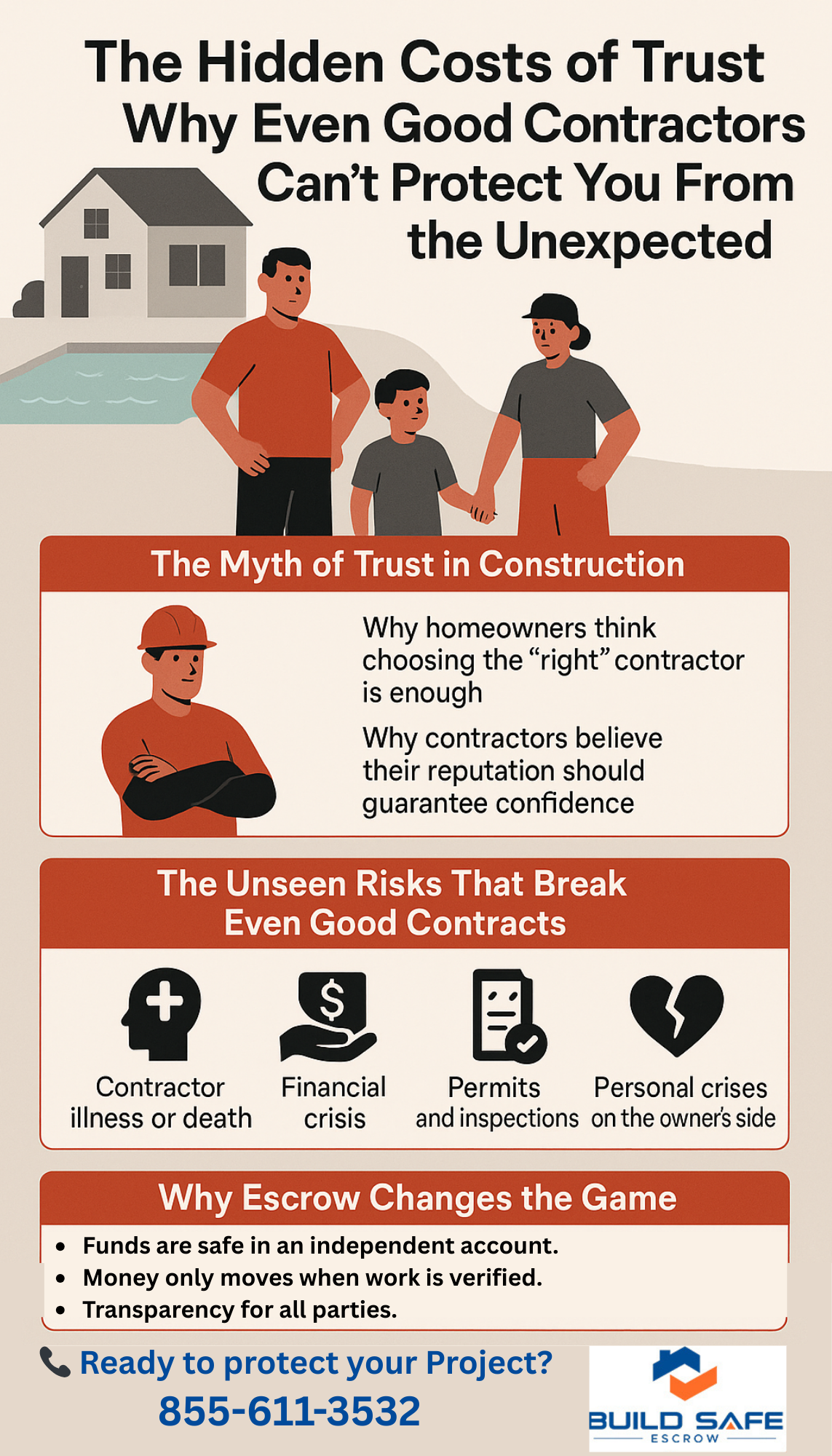
We often assume disaster only happens when you choose a shady contractor. But the truth is, even the best contractors can’t shield you from risk. Here are just a few scenarios that derail projects every day:
- Health crises: A stroke, accident, or illness that forces a contractor to step away.
- Financial collapse: Even reputable companies can hit cash flow issues, leading to bankruptcies.
- Economic shocks: Supply chain breakdowns, material price hikes, or sudden recessions.
- Regulatory delays: Permits, inspections, or HOA approvals that stall work for months.
- Owner-side issues: Divorce, sudden job loss, or unexpected expenses that interrupt funding.
None of these scenarios are about trust. They’re about reality. And reality doesn’t pause for a construction contract.
This is why homeowners and contractors alike need more than goodwill. They need a financial seatbelt.
Escrow: The Safety Net for Modern Renovations
Construction escrow is the neutral ground where both sides are protected. Instead of handing over tens of thousands of dollars directly to a contractor, the funds sit safely in an escrow account managed by a trusted third party.
Here’s how it changes everything:
- Funds are released by milestones. Work must be completed and verified before the next draw is paid out.
- Homeowners protect their renovation. Money isn’t at risk if unforeseen events stop the project mid-way.
- Contractors gain credibility. They can show clients, “I get paid when I deliver.”
- Transparency builds trust. Everyone sees where the money is, what’s been approved, and what’s left.
It’s not about distrust—it’s about resilience.
Protect Your Renovation, Protect Everyone
Escrow doesn’t just shield homeowners. It creates balance across the board:
- For homeowners: Peace of mind that funds can’t vanish into thin air.
- For contractors: Eliminates the constant fear of not getting paid for completed work.
- For subcontractors & suppliers: Payments flow when milestones are met, keeping the supply chain steady.
- For HOAs & condo boards: Protects community funds, avoids lawsuits, and maintains resident confidence.
In short, escrow isn’t just about money—it’s about trust with guardrails. It’s the smartest way to protect your renovation and ensure everyone involved has a safety net.
Practical Steps You Can Take
So how do you move from “trust” to true protection?
- Ask the right question: Before funding any project, say: “Where will my money sit until work is completed?”
- Introduce escrow early: Contractors who offer escrow instantly stand out in a crowded market.
- Know the costs: At Build Safe Escrow, fees start at a small flat rate—often less than 1% of your project cost. That’s pennies compared to losing thousands when projects derail.
- Secure milestones: Break the project into specific phases—excavation, framing, electrical, finishes—and tie payments to proof of completion.
- Get started today: Setting up an escrow account is faster than pulling permits—and it’s just as essential.
Conclusion: Trust Is Priceless, But It’s Not Enough
No homeowner ever regrets being cautious. But many regret trusting blindly.
The lesson is clear: trust is vital, but it’s not a plan. Escrow is the missing piece that turns trust into certainty, and good intentions into finished projects.
If you’re planning a renovation, don’t just trust—protect your renovation. Because life is unpredictable, and your money deserves better than hope.
👉 Want to explore escrow options for your renovation project?
Contact Build Safe Escrow for a free consultation. Let’s help you manage repairs and renovations with confidence, structure, and complete transparency.
📞 Call us at (855) 611-3532
🌐 Visit www.buildsafeescrow.com
Ready to Go Deeper? Grab Our Free Guides:
🏡 For Property Owners:
Renovate Smarter: How to Protect Your Project Funds
Discover how to avoid common renovation pitfalls, protect your money, and choose the right contractor with confidence.
📥 Download the free guide
👷 For Contractors:
Win More Jobs with Escrow: A Contractor’s Guide to Securing Projects and Payments
Learn how offering escrow-backed bids can help you stand out, get paid faster, and build a reputation for professionalism.
📥 Download the contractor guide
➕ More Resources from Build Safe Escrow:
🚧 How to Protect Your Construction Funds, Even with a Great Contractor
📄 The One Agreement That Can Save Your Renovation—and You Don’t Need a Lawyer to Use It
🛑 Construction Disputes Are Costly—Here’s How Escrow Solves Them
Protect your renovation – FAQs
Why can’t I just trust my contractor?
Even the best contractors with stellar reputations and decades of experience can’t protect you from unexpected events. The article highlights that life happens—a contractor could face a health crisis, their company could go bankrupt, or a supply chain issue could halt the project. These are not issues of dishonesty or fraud, but of reality. Trust is essential, but it can’t solve these problems or finish a project on its own.
What are some examples of the “hidden costs of trust”?
The article points out several scenarios that can derail a project, and none of them have to do with a lack of trust. These include a contractor’s health crisis, the financial collapse of their company, larger economic issues like supply chain breakdowns, and regulatory delays with permits or inspections. Any of these unforeseen circumstances can stop a project mid-way, leaving you with an unfinished project and potentially lost money.
How does escrow protect both the homeowner and the contractor?
Escrow is a neutral third-party service that holds a project’s funds until specific milestones are completed and verified. For the homeowner, this means your money is safe and won’t be lost if the project stops unexpectedly. For the contractor, it offers peace of mind that they will get paid for completed work, eliminating the constant fear of a client not paying up. This system ensures both parties are protected and that funds are only released when progress is made.
What’s the biggest benefit of using escrow?
The biggest benefit is financial resilience. Escrow isn’t about distrust; it’s about adding a safety net. It creates a transparent system where everyone can see where the money is and what has been approved. This approach ensures that money is tied to actual work, not just good intentions. It protects homeowners from losing funds and provides a clear, reliable payment schedule for contractors and subcontractors.
How can I suggest using an escrow service to my contractor?
The best way to introduce the idea of escrow is to frame it as a benefit for both parties. You can start by asking, “Where will my money sit until the work is completed?” This question opens the door to a discussion about financial protection. Explain that using an escrow service isn’t about distrusting them, but about creating a “safety net” for everyone involved. Point out that it provides transparency and ensures they get paid for their work as milestones are completed, which also protects them from client-side issues. By positioning it as a way to build a more resilient and transparent partnership, you’re more likely to get a positive response.