
The Nightmare Every Contractor Dreads: Client Not Paying
You’ve done everything right.
The work is complete, the punch list is clear, and your client was all smiles at the final walkthrough. Then… silence. No payment, no explanation — just unanswered emails and “next week” promises.
If this sounds familiar, you’re not alone. Across the U.S., late or missing payments are among the top three reasons contractors lose revenue each year. The frustration isn’t just about money; it’s about fairness.
Before you pick up the phone to call your lawyer, take a breath. There are smarter, faster moves to handle a client not paying contractor situation — and even better, ways to make sure it never happens again.
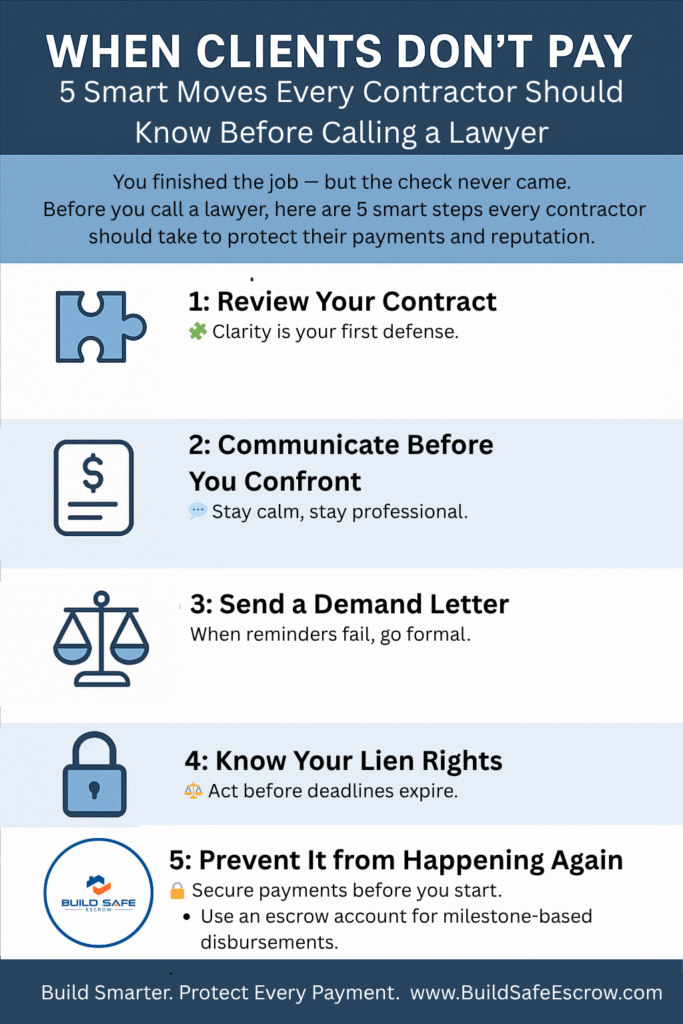
1. Revisit the Agreement — Clarity Is Your First Defense
Your contract is your lifeline. Start by reviewing:
- Payment terms: Are due dates, amounts, and methods clearly stated?
- Scope of work: Was every deliverable defined to avoid disputes?
- Approval and verification clauses: Does the contract mention when “completion” is officially recognized?
If your contract lacks detail, you may have little leverage. That’s why future projects should include specific milestones tied to verifiable deliverables and clear payment release triggers.
💡 Pro Tip: For better control, use an escrow-based agreement where funds are deposited upfront and released only when milestones are met. That’s a form of contractor payment protection designed to prevent this exact problem.
2. Communicate Before You Confront
It’s tempting to go straight to threats or legal letters — but that often escalates tension. Start with a professional, written reminder:
- Summarize the work completed and payment due.
- Attach your final invoice and contract excerpt referencing payment terms.
- Offer a short grace period (5–7 business days) before further action.
Sometimes clients delay out of oversight or cash flow timing, not malice. Clear, calm communication gives them a chance to correct the issue — and strengthens your record if you later need to pursue legal remedies.
3. Send a Formal Demand Letter (the Right Way)
If reminders fail, a formal demand letter shows you’re serious — and legally prepared. Include:
- The amount owed and the original due date.
- Documentation (invoices, photos, signed approvals).
- A deadline for payment (usually 10–14 days).
- A statement of next steps if payment isn’t received (such as filing a lien or claim).
This letter often triggers quick results — especially when written professionally and supported by evidence. It also becomes part of your legal trail should you escalate the matter later.
4. Know Your Lien Rights — and Deadlines
Most states allow contractors to file a mechanic’s lien to secure unpaid work — but the clock starts ticking fast. In some places, you have as little as 60 days to file.
A lien puts pressure on the client because it attaches to the property’s title, complicating sales, refinancing, or future permits.
However, filing a lien can also strain your reputation and relationships, so treat it as leverage, not revenge. Always consult your state’s construction law guidelines or a local attorney before filing.
5. Prevent It from Ever Happening Again
Here’s the hard truth: most contractors only start thinking about payment protection after they’ve been burned.
But the most successful builders? They’ve already built safeguards into their process.
That’s where construction escrow comes in.
With Build Safe Escrow, funds are:
- Deposited into an FDIC-insured escrow account before work begins.
- Held securely by a neutral third party.
- Released automatically as each milestone is verified.
This creates a transparent, trust-based system where both contractor and client are protected.
No chasing. No excuses. No unpaid invoices.
Escrow transforms your process from “hope I get paid” to “I know I’ll get paid.”
And when clients see that you work with escrow, they view you as professional, structured, and trustworthy — the kind of contractor everyone wants to hire.
Bonus: How to Explain Escrow to Clients
Some contractors worry that suggesting escrow will scare clients off. In reality, it does the opposite.
Here’s a simple way to explain it:
“Escrow isn’t about distrust — it’s about protecting both of us. You know your money is safe until the work is verified, and I know the funds are ready when the job is done. It keeps us both accountable and avoids delays or disputes.”
That single conversation can change how clients perceive your business — from risk to reliability.
Conclusion: Build Smarter, Not Harder
A client not paying contractor situation can test your patience and professionalism. But you don’t have to stay stuck in that cycle.
By reviewing your contracts, communicating clearly, documenting your work, and using escrow for future projects, you take control of your financial security.
At Build Safe Escrow, we help contractors nationwide protect their payments with verified milestones and on-time disbursements — so you can focus on what you do best: building.
Protect your next project at www.BuildSafeEscrow.com.
How to Get Started with Contractor Payment Protection
If you’re ready to protect your projects and your peace of mind, here’s how to start:
1. Define Milestones Clearly
Before signing, outline the project’s payment stages with your client. Be specific—use measurable milestones such as “rough plumbing inspection complete” or “tile installation verified.”
2. Introduce Escrow in Your Proposal
Clients appreciate transparency. Tell them their funds will be held safely and released only when work is verified. This builds trust and shows you’re a professional who values fairness.
3. Choose a Reliable Escrow Partner
Work with a licensed, construction-focused service like Build Safe Escrow, which specializes in contractor payment protection through milestone-based disbursements. All funds are held in FDIC-insured accounts and released only after both sides confirm completion.
4. Join the Escrow-Friendly Contractor Network
Join the growing list of contractors who use escrow as proof of professionalism. It’s free to join and helps you get visibility in front of property owners actively seeking reputable builders.
5. Try It for $99
Experience escrow on your next project for only $99 with Build Safe Escrow’s introductory offer. One project—complete peace of mind.
Read our latest blogs:
- Home Renovation Cost in 2026: What Owners Should Budget, State by State
 What a renovation really costs in 2026, why the same kitchen is priced differently in Texas and New York, and how owners keep every dollar tied to finished work.
 - Construction Escrow for Contractors: How It Works and How You Get Paid
 Escrow from the contractor’s seat: proof the money exists before you start, a milestone schedule you help write, and payment that arrives on verification instead of on a promise.
 - How Construction Escrow Works: A Simple Guide for Property Owners
 A plain walkthrough of how construction escrow works for homeowners funding a renovation or build: where the money sits, when it moves, and what happens if a contractor stops.
 - Construction Escrow for Property Managers: How It Works, Simplified
 A plain walkthrough of construction escrow for property managers: how funds are held, how milestones get verified, and how the whole thing becomes a report your owners can read.
 - Property Manager Vendor Payments: How to Pay Contractors Across a Portfolio Without Carrying the Risk
 A property manager’s guide to paying contractors and vendors across a portfolio without becoming the one who absorbs the risk: verified releases, lien protection, and a structure that keeps owner funds separate and accountable.
When Clients Don’t Pay: Most Frequently Asked Questions
What should I do first if a client isn’t paying?
Start by reviewing your contract to confirm payment terms, milestones, and completion definitions. Then, communicate professionally — send a written reminder summarizing the work completed and the payment due. Many disputes resolve once everything is clearly documented.
When is it time to send a demand letter?
If polite reminders and follow-ups go unanswered after 7–10 business days, it’s time to send a formal demand letter. This written notice should outline the amount owed, proof of completed work,
and a clear payment deadline. It shows professionalism and establishes a record if legal action becomes necessary later.
What are my options if the client still refuses to pay?
You can explore filing a mechanic’s lien, which places a claim on the property until the debt is settled. However, deadlines vary by state (some as short as 60 days). Consulting a construction attorney or using a licensed escrow service for future projects helps you avoid reaching this stage again.
How can I prevent nonpayment problems in the future?
The best way to prevent unpaid invoices is to verify project funds upfront through construction escrow. Funds are held in a neutral, FDIC-insured account and released only when agreed milestones are verified. Both contractor and client stay protected from disputes and delays.
Will using escrow make clients hesitant to hire me?
Actually, it builds trust. Clients feel reassured knowing their money is secure and will only be released when work is verified. Presenting escrow as a standard part of your proposal positions you as transparent, accountable, and professional — exactly the kind of contractor clients prefer to work with.