
You paid for the work. The contractor delivered. Your project is finished and you’re finally enjoying your dream kitchen, bathroom, or newly renovated home. Then, just when you think it’s all behind you, a certified letter arrives: a lien has been placed on your property.
It’s confusing, frustrating, and often shocking. How could this happen when you already paid for everything?
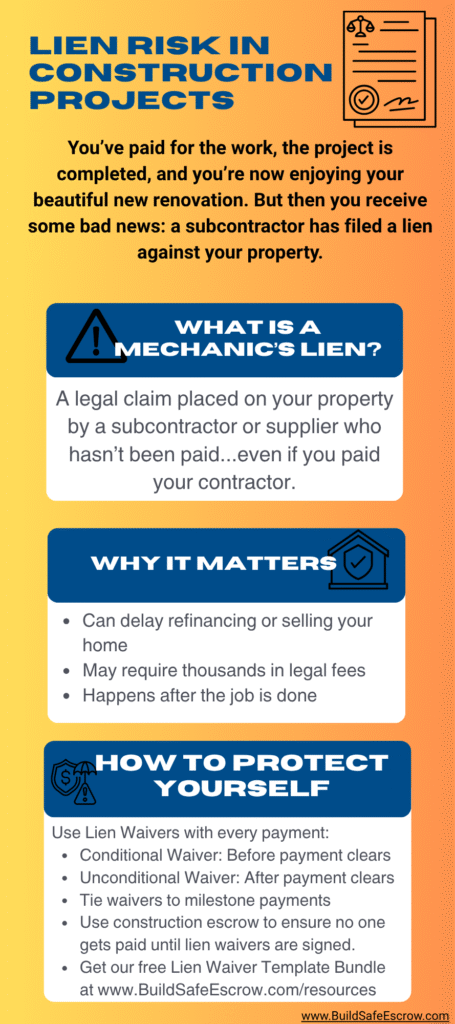
Unfortunately, this is a reality that plays out more often than it should. Even when the job is complete and the contractor is paid in full, unpaid subcontractors or suppliers can still legally file a lien against your home; claiming they weren’t compensated by the general contractor.
It’s not just paperwork; it’s a legal claim that can cloud your title, delay a sale or refinance, and cost thousands to resolve. That’s why understanding lien waivers, how they work, and when to use them is not just smart; it’s essential.
What Is a Lien and Why Should Property Owners Care?
A construction lien (also called a mechanic’s lien) is a legal claim filed by a contractor, subcontractor, or supplier who hasn’t been paid for their work or materials. Once filed, it attaches to your property title, clouding ownership and making it nearly impossible to refinance or sell your property until it’s resolved.
Here’s the kicker: you can still get a lien even if you paid your contractor in full. Why? Because if they didn’t pay their subs or vendors, those parties can go after your property.
Common Scenarios That Trigger Liens
- Lack of communication and clarity: Contractors don’t always disclose every sub or vendor they hire.
- Upfront payments with no controls: When large payments are made before work is completed, it becomes difficult to trace where the money goes.
- Missing lien waivers: Many owners forget to request signed lien releases when making payments.
- Disputes over project scope or quality: A contractor may stop work if they believe they’ve done more than what was agreed upon and file a lien to push for payment.
States With the Strictest Lien Laws
Some states are especially aggressive in protecting contractors’ rights to file liens. In these places, even minor payment delays can quickly escalate into legal filings:
🟥 High-Risk States:
- Florida: Subcontractors and suppliers don’t need direct contracts with the property owner. They must simply provide a “Notice to Owner,” which many owners miss.
- Texas: Complex pre-lien notice requirements and very short timelines.
- California: Requires a preliminary notice and allows multiple tiers of subcontractors to file liens.
- New York: Almost any party who supplies labor or materials can file a lien; even months after the job ends.
🟨 Moderate-Risk States:
- Illinois: Generally fair to both parties, but lien deadlines must be followed carefully.
- Nevada: Strict timelines but easier to contest.
- Arizona: Subcontractors have strong rights, but they must notify the owner within 20 days of starting work.
🟩 Lower-Risk or More Owner-Friendly States:
- Wisconsin, Georgia, North Dakota : These states often require strict documentation or additional steps from lien claimants, making liens less common if paperwork isn’t in order.
👉 Reminder: Lien laws vary not just by state, but sometimes by county. Always check local rules or better yet, work with professionals who already understand the system.
How to Avoid Lien Risk in Your Project
💡 Here’s the truth: Even a good contractor can run into cash flow issues. And when that happens, your project becomes a financial battleground. Here’s how to protect your peace of mind:
✅ 1. Use a Construction Escrow Account
A construction escrow account holds your funds securely and only releases money as milestones are completed. Each payment can be tied to lien waivers, ensuring no one goes unpaid, and no surprise liens are filed.
✅ 2. Require Lien Waivers with Every Payment
Whether you’re paying directly or through escrow, always collect conditional lien waivers before payment and unconditional lien waivers after payment.
✅ 3. Know Who’s On Your Jobsite
Ask for a list of all subcontractors and material suppliers. With construction escrow, this becomes part of the onboarding process, not an afterthought.
✅ 4. Don’t Pay Everything Upfront
Upfront payments increase risk. Milestone-based disbursements reduce it. Construction Escrow allows you to fund your project safely without losing control.
What If a Lien Is Already Filed?
- Don’t panic, but don’t ignore it.
- Contact an attorney and request documentation of the claim.
- If you used construction escrow and the lien was filed fraudulently, you have a strong case to dispute it and can potentially file a Notice of Contest.
- Otherwise, resolving a lien could require a settlement, court hearing, or paying the lien off (even if it’s not your fault).
Build Safe Escrow: Your Defense Against Surprise Liens
At Build Safe Escrow, we protect your project by:
- Managing all payments tied to milestones
- Releasing funds only when proper lien waivers are in place
- Providing clear documentation for every disbursement
- Giving you a trusted partner who understands construction law and finance
🛡️ No more guesswork. No more worrying whether the roofer got paid. Just peace of mind, one milestone at a time.
Don’t Just Collect Lien Waivers; Send Them, Too
If you’re a contractor, supplier, or subcontractor, sending lien waivers proactively shows professionalism, builds trust, and helps you get paid faster. For property owners, requesting waivers with each payment helps keep everyone accountable.
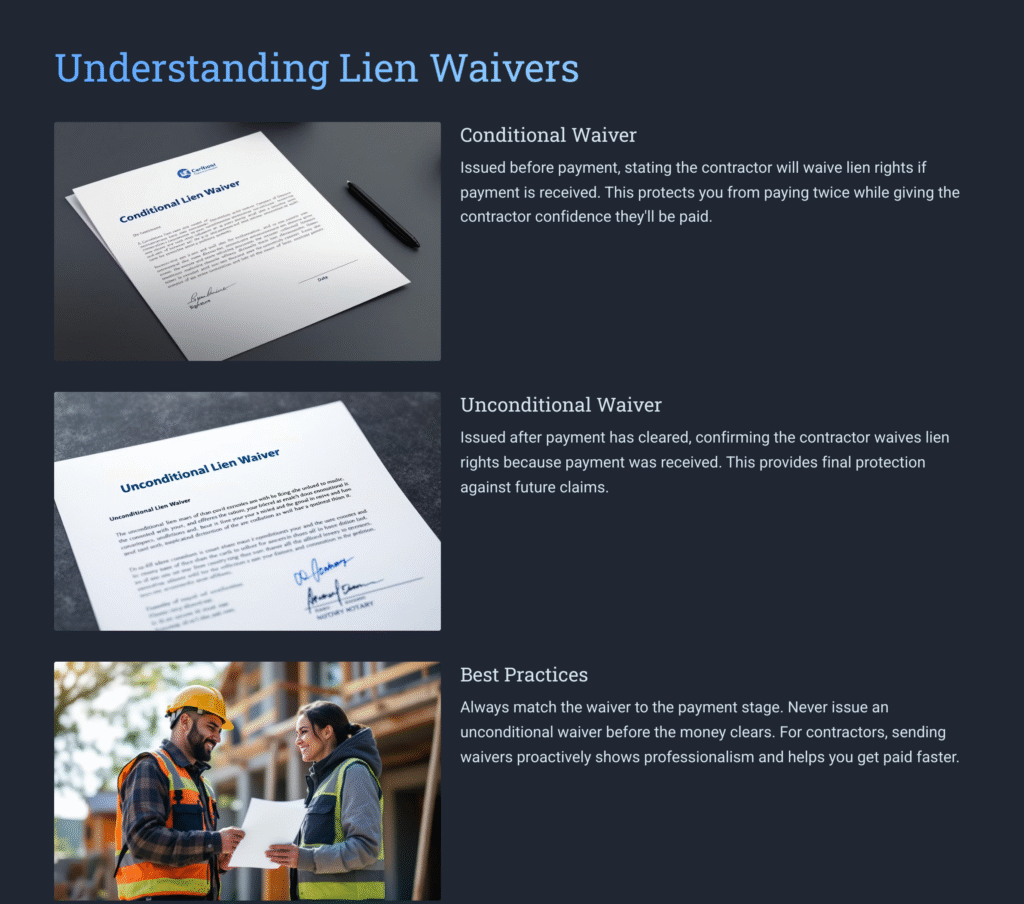
There are two types of lien waivers you should become familiar with:
- Conditional Waiver: Issued before payment, stating the contractor will waive lien rights if payment is received.
- Unconditional Waiver: Issued after payment has cleared, confirming the contractor waives lien rights because payment was received.
💡 Tip: Always match the waiver to the payment stage. Never issue an unconditional waiver before the money clears.
📥 Download Our Free Lien Waiver Template Bundle
We’ve created a simple, lawyer-reviewed template for both conditional and unconditional lien waivers—free to download and use for your next project.
👉 Click here to download the lien waiver template
Disclaimer:
The information and templates provided by Build Safe Escrow are for general informational purposes only and do not constitute legal advice. Some states require state-specific lien waiver forms or have unique legal requirements that these templates may not meet. We strongly recommend consulting with a qualified attorney or construction law professional to ensure compliance with your local laws and to determine the appropriateness of these documents for your project. Use of these templates is at your own risk.
✅ Ready to Protect Your Project Funds?
Whether you’re planning a $20K bathroom remodel or a $2M luxury build, don’t leave your property vulnerable. Schedule a free consultation with Build Safe Escrow today and protect your investment from day one with simplified construction escrow and milestone-based payments.
💼 Property Owner? Contractor? HOA Manager? We’ve got you covered.
🔐 Let’s build with confidence, not blind trust.
👉 Schedule Your Free Consultation
📞 Call us at 855-611-3532
📩 Email us: info@buildsafeescrow.com
Ready to Protect your Project?