
Ask any contractor where they lose the most money. Almost universally, the answer is the same: the final payment. The client is happy enough with 95% of the work — but suddenly finds ‘problems’ that justify withholding the last check. This pattern is so common it has a name in the industry: final payment hostage. Here’s how to make it structurally impossible.
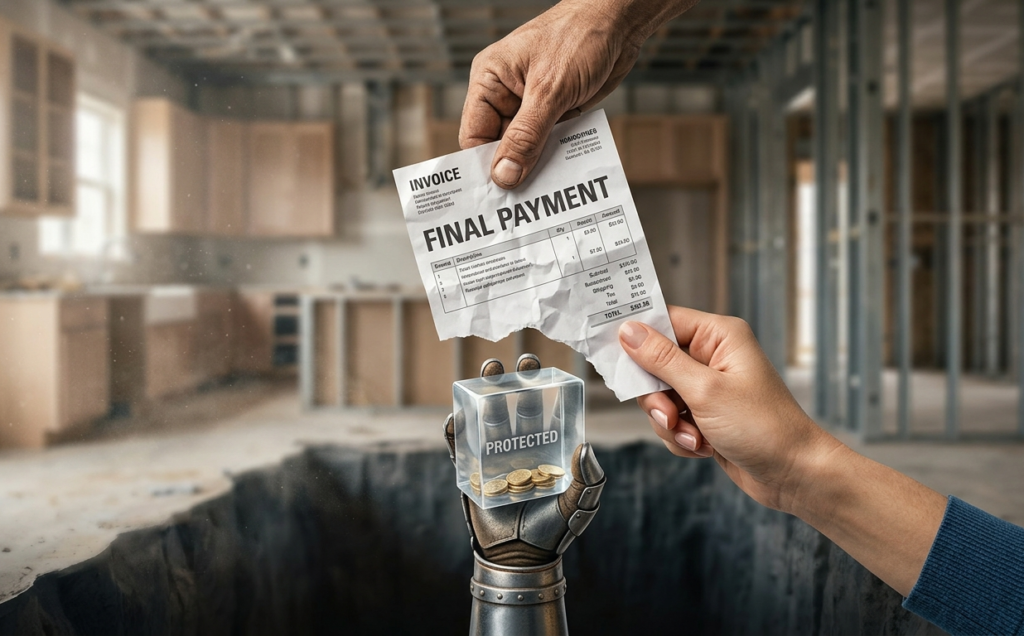
Why the Final Invoice Is the One Most Likely to Go Unpaid
The final payment sits at the worst possible intersection of human psychology and project dynamics:
- The client has received most of the value — the house is livable, the kitchen works, the roof doesn’t leak
- You’ve lost your primary leverage — stopping work is no longer a threat when the work is done
- Punch list items give the client ammunition to dispute payment on subjective grounds
- The relationship has often frayed after months of decision-making, dust, and disruption
| Key insight: The final payment is the most frequently disputed invoice in construction. And with traditional payment structures, the contractor almost always loses — because the client holds the money. |
How Escrow Makes the Final Payment Just Like Every Other Payment
When project funds are held in a construction escrow account from day one, the final payment doesn’t work differently from the first. It’s already sitting in the account — the client can’t spend it, can’t claim they ‘don’t have it,’ and can’t use financial pressure to force concessions.
- The final payment conditions are defined in the Escrow Agreement before work begins
- ‘Final inspection passed and punch list complete’ is a verifiable milestone, not a subjective judgment
- If a dispute arises, the funds stay frozen until it’s resolved — neither party wins by stonewalling
- The escrow company acts as a neutral reference for what was agreed versus what was delivered
Punch Lists, Disputes, and How to Handle Both Professionally
A punch list — a final list of minor items to complete or correct before final payment — is normal and professional. The problem isn’t punch lists. The problem is punch lists that grow, move the goalposts, or include items that were never part of the original scope.
- Define what a ‘complete’ punch list looks like in your contract before work begins
- Conduct a formal walkthrough with the client and document every punch list item in writing
- Set a deadline for new punch list items — after the walkthrough, no new items can be added
- Use photo documentation throughout the project so you have evidence of completion for every milestone
| Important: Construction escrow doesn’t prevent punch lists. It prevents punch lists from being weaponized. The funds are there, the agreement is there, and a resolution process is already in place. |
Making ‘I Work With Escrow’ Your Closing Statement
The best time to introduce construction escrow to a new client is during the bid presentation — not after problems start. Frame it this way:
‘I use a construction escrow company for all my projects. It means your funds are protected in an FDIC-insured account, and I get paid as I hit each milestone we agree on. No surprises for either of us — just a clean, professional process from start to finish.’
This statement does three things: it demonstrates professionalism, it signals financial stability, and it eliminates the client’s fear of being defrauded — making them more likely to say yes at a fair price.
When your final payment is guaranteed by the same system that guaranteed your first, you can focus on the work instead of the invoice.
| Ready to get started? Protect your final payment — and every other payment — with Build Safe Escrow’s milestone-based escrow services for contractors. Start your first escrow-backed project with a free consultation at buildsafeescrow.com/contact. |
Frequently Asked Questions About Final Payment Protection in Construction?
What is a final payment in construction?
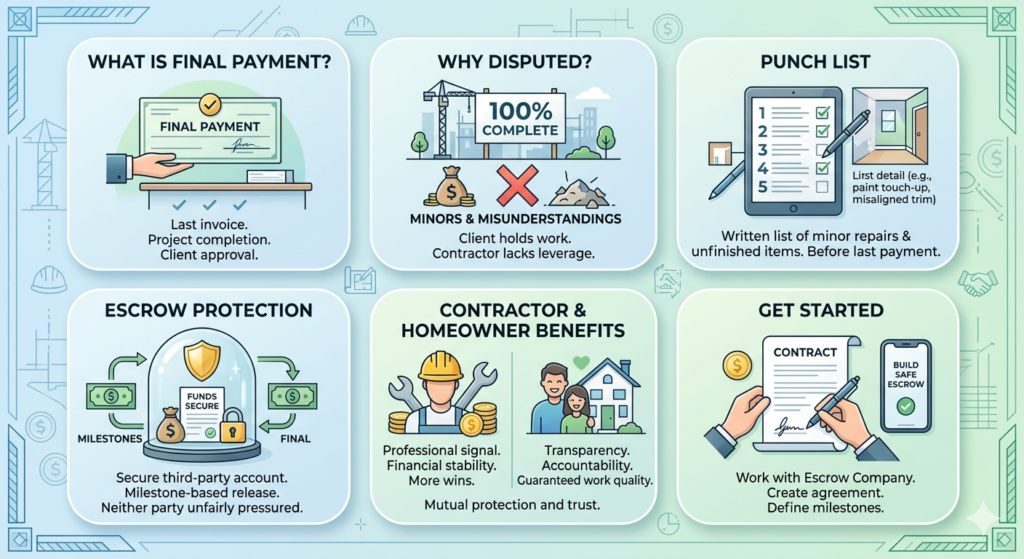
The final payment is the last invoice paid at the completion of a construction or renovation project. It is typically released after the final walkthrough, punch list completion, and client approval.
Why is the final payment the most disputed payment in construction?
The final payment is often disputed because the client already has most of the completed work and the contractor has little leverage left. Small punch list items, misunderstandings, or strained communication can lead to delayed or withheld payments.
What is a punch list?
A punch list is a written list of minor repairs, corrections, or unfinished items identified near the end of a construction project before final payment is released.
Can a client legally withhold final payment?
A client may withhold payment if work is incomplete or does not meet the contract terms. However, disputes often arise when expectations are unclear or punch list items become subjective. Clear agreements and escrow protections help reduce these situations.
How does construction escrow protect final payments?
Construction escrow holds project funds in a secure third-party account before work begins. Funds are released only when agreed-upon milestones are completed, including the final payment milestone. This prevents either party from using financial pressure unfairly.
What happens if there is a dispute during the final payment stage?
If a dispute arises in an escrow-backed project, the funds remain securely held until the issue is resolved according to the escrow agreement. This creates a neutral process instead of forcing one side to absorb all the risk.
Does construction escrow benefit homeowners too?
Yes. Construction escrow protects homeowners by ensuring funds are only released when agreed work is completed. It also creates transparency, accountability, and documented milestones throughout the project.
What should contractors include in their contracts to protect final payments?
Contractors should clearly define:
Final payment conditions
Punch list procedures
Deadlines for additional corrections
Milestone completion requirements
Change order approval processes
Documentation expectations
Clear contracts reduce confusion and help avoid disputes.
Can construction escrow help contractors win more projects?
Yes. Offering construction escrow signals professionalism, transparency, and financial stability. Many clients feel more comfortable hiring contractors who use milestone-based escrow payment systems.
What types of projects can use construction escrow?
Construction escrow can be used for:
Home renovations
Kitchen and bathroom remodels
Roofing projects
Additions and new construction
Commercial build-outs
Architectural and design agreements
Any project involving milestone payments can benefit from escrow protection.
What is milestone-based payment in construction?
Milestone-based payment means funds are released in stages as specific parts of the project are completed, inspected, and approved. This keeps payments aligned with actual project progress.
How do I get started with construction escrow?
You can start by working with a professional construction escrow company like Build Safe Escrow to create an escrow agreement, define milestones, and securely manage project funds from start to finish.